



































Industrial dust removal system design: from equipment selection to pipeline layout guide
Oct 15,2025
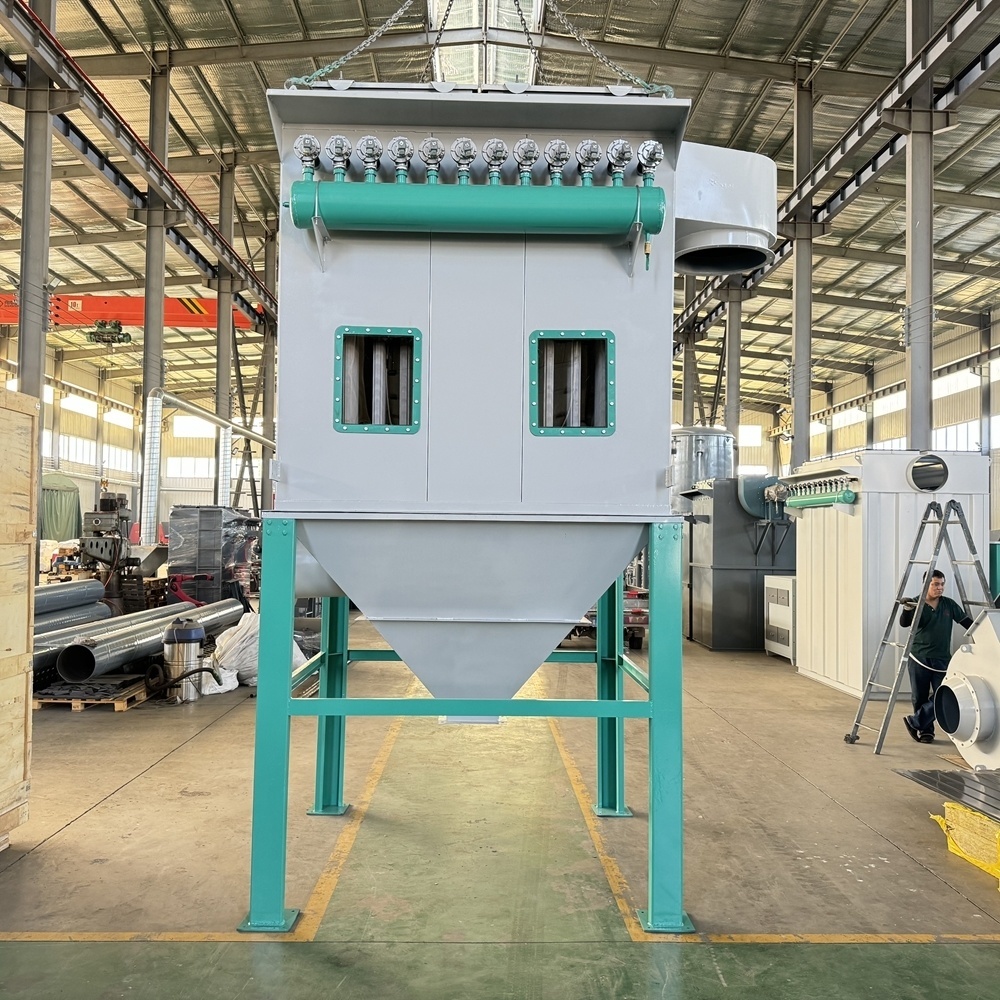
The design of industrial dust removal systems in overseas factories often results in low overall efficiency and non compliant emissions due to "incorrect equipment selection" and "blocked air in pipelines", and the cost of later renovation exceeds the initial investment. In fact, the core of system design is "precise equipment selection matching working conditions+pipeline layout reducing resistance". By implementing these two modules, it can not only meet the EU CE and US EPA standards, but also reduce energy consumption by 20%, adapting to the foreign trade production needs of multiple industries such as chemical, metallurgical, and food.
1、 Step 1: Equipment selection - determine the core according to the "working condition requirements" and not blindly follow the trend
The equipment is the "heart" of the dust removal system. If the selection is wrong, the entire system will fail. It needs to be accurately matched around the three dimensions of "dust characteristics, processing scale, and compliance requirements":
1. Select equipment type based on dust characteristics (core basis)
Coarse dust (>10 μ m), high concentration: It is recommended to use a combination of cyclone dust collector and bag filter, which is suitable for mining crushing, building materials and cement workshops and other scenarios. Firstly, coarse separation is carried out through a cyclone dust collector, and then fine filtration is achieved through a bag filter, which can effectively reduce the load on the main equipment.
Medium fine dust (0.5-10 μ m), room temperature: It is recommended to choose a filter cartridge dust collector, which is commonly used in scenarios such as electronic factory welding smoke treatment and furniture factory sawdust collection. Using membrane filter material, the capture efficiency can reach 99.9%, and the emission concentration meets the EPA standard of ≤ 5mg/m ³.
Sub micron dust (<0.5 μ m), high temperature: Electrostatic precipitators are an ideal choice, suitable for high-temperature conditions such as steel plant blast furnaces and power plant fly ash treatment. This device can withstand high temperatures of 300 ℃ and does not require replacement of filter bags.
High humidity (>60% humidity), sticky dust: It is recommended to use a plastic fired board dust collector, which is suitable for high humidity environments such as Southeast Asian rubber factories and Nordic paper mills. Its hydrophobic and non adhesive properties can avoid shutdown problems caused by pipeline blockage.
Corrosion and hygiene requirements: Choose PTFE coated bag filter, suitable for chemical acid and alkali dust treatment, food factory flour collection and other scenarios. This device is resistant to pH2-12 corrosion and meets FDA standards.
2. Determine equipment parameters based on processing scale
Processing air volume: Calculated based on "total air volume of workshop dust production points+15% margin", for example: 3 dust production points with a capacity of 2000m ³/h, choose 6900m ³/h air volume equipment to avoid insufficient air volume and incomplete suction;
Equipment size: Choose compact vertical equipment for small workshops and horizontal multi module equipment for large factories to save space;
Energy consumption matching: Priority should be given to variable frequency fan equipment, which automatically slows down when dust concentration is low, saving 25% energy compared to fixed frequency fans and meeting the "low-carbon" compliance requirements of Europe and America.
3. Equipment configuration according to regional regulations
European and American markets: The equipment needs to be equipped with ATEX explosion-proof and FDA certification, and equipped with an online dust concentration monitor. The data can be synchronized to the local environmental protection platform;
Southeast Asia/Middle East markets: Equipment shell with anti-corrosion coating (high humidity/high temperature), ash hopper with heating sleeve, suitable for local climate.
2、 Step 2: Pipeline Layout - Design according to the principle of "reducing resistance" without neglecting details
The pipeline is the "blood vessel" of the dust removal system. If the resistance is high, the suction will weaken and energy consumption will soar. It needs to be optimized around the three key points of "pipe diameter calculation, route design, and accessory configuration":
1. Pipe diameter calculation: Size according to "wind speed" to avoid pipe blockage or waste
Core principle: The pipeline wind speed should be controlled at 12-20m/s. The coarser the dust, the higher the wind speed should be. If the wind speed is too low, it is easy to accumulate dust and block the pipeline. If it is too high, it will cause greater resistance and noise;
Calculation method: Pipe diameter (mm)=√ [4 x air volume (m ³/h)/(3.14 x air speed (m/s) x 3600)] x 1000;
Foreign trade adaptation: DN standard pipe diameter is preferred in the European and American markets, while inch markings are used in Southeast Asia to avoid mismatched accessories during installation.
2. Towards design: 3 key points for avoiding pitfalls
Avoid right angle bends: The resistance of right angle bends is 30% higher than that of 45 ° bends. When turning, use a circular arc bend with R ≥ 1.5D (D is the pipe diameter), such as using a 150mm pipe diameter bend with R ≥ 225mm;
Avoid horizontal long pipes: When the length of a horizontal pipe exceeds 10m, add a slope of 3 ° -5 ° to allow dust to naturally slide into the ash hopper and prevent accumulation;
Branch pipe layout: The multi dust point branch pipes require "equidistant pressure distribution", and each branch pipe is equipped with a valve to adjust the air volume, avoiding strong suction near and insufficient suction far away.
3. Attachment configuration: Small components solve major problems
Dust cleaning device: Pulse blowing valves are installed every 8-10m on horizontal long pipes to regularly clean the accumulated dust inside the pipes, suitable for high humidity and high viscosity dust scenes;
Sealing element: Temperature resistant and anti-corrosion sealing gasket is used at the flange connection, and the air leakage rate is controlled at<1% to avoid unfiltered air from entering;
Explosion proof accessories: Chemical and oil and gas workshop pipelines are equipped with explosion-proof valves that comply with ATEX standards to prevent dust explosion risks.
3、 Bonus point for foreign trade system design: meeting global landing needs
1. Regional working condition adaptation:
High humidity area (Southeast Asia): The pipeline is insulated to prevent condensation, and the ash hopper is electrically heated;
High temperature zone (Middle East): High temperature resistant stainless steel is used for pipelines to avoid thermal expansion and contraction deformation;
Cold region (Northern Europe): The pipeline is wrapped with rock wool insulation to prevent dust from freezing at low temperatures.
2. Installation and operation adaptation:
Provide detachable pipeline modules for convenient transportation in narrow workshops overseas;
Supporting multilingual installation manuals and videos, local technicians can install independently;
3. Preparation of compliance documents:
Provide pipeline material testing reports and system resistance calculations to assist European and American clients in passing environmental audits.
Summary: The selection is based on whether it can meet the standards, and the layout is based on whether it can save costs or not
For overseas factories, the design of industrial dust removal systems is not a simple combination of equipment and pipelines, but a comprehensive matching of working conditions, compliance, and cost. Choosing the right equipment ensures dust interception; The pipeline layout has been optimized, resulting in low energy consumption and fewer malfunctions. By following the logic of "selection first, layout later" and fine-tuning based on regional characteristics, a dust removal system with "one-time design and long-term compliance" can be created, avoiding rework and waste in the later stage and perfectly adapting to foreign trade production needs.
Hot Tags:


Contact Us
Tel:
WeChat:
WhatsApp:
E-mail:
Address:
338 National Road South, Longfengdian Village, Botou City, Hebei Province, China
JiuznTomine is expertly delivering technically complicated projects in markets & provides custom solutions for their customized need.


CONTACT INFO
Tel: +86 18531710311
WeChat: +86-18531710311
338 National Road South, Longfengdian Village, Botou City, Hebei Province, China