











Filter cartridge dust collector filter cartridge replacement cycle: determined by working conditions, without blind waste
Oct 11,2025

Overseas factories often struggle with how often to replace filter cartridges when using filter cartridges for dust collectors. Early replacement wastes costs, while late replacement leads to decreased suction and excessive emissions. In fact, there is no fixed answer to the replacement cycle of filter cartridges. The core depends on "working conditions characteristics+filter material+usage signal". Accurately judging based on these three points can not only avoid EU CE and US EPA compliance risks, but also save filter material expenses and adapt to the needs of multiple industries such as electronics, food, and chemical.
1、 Three core factors determine the length of the replacement cycle
The working conditions of different overseas factories vary greatly, which directly affects the service life of the filter cartridge. First, clarify the key influencing items:
1. Dust characteristics: The higher the concentration, the stronger the viscosity, and the shorter the period
Low concentration dry powder dust (such as plastic dust from electronic factories, concentration<5g/m ³): slow filter blockage and long cycle;
High concentration sticky dust (such as furniture factory sawdust, rubber factory adhesive powder, concentration>15g/m ³): The pores of the filter material are prone to clumping, shortening the cycle by 50%;
Corrosive dust (such as acidic and alkaline dust in chemical industry): It can corrode the filter film, and even at low concentrations, the cycle is 30% shorter than ordinary dust.
2. Working condition temperature and humidity: high temperature and high humidity accelerate the aging of the filter cartridge
Room temperature drying (≤ 80 ℃, humidity<40%): The filter material has good stability and the longest cycle;
Medium high temperature (80-150 ℃): The filter material is prone to softening, and the lifespan of ordinary polyester filter cartridges is reduced from 8 months to 5 months;
High humidity (humidity>60%): Dust absorbs moisture and adheres to the filter cartridge, resulting in incomplete dust removal and a 40% shorter cycle compared to dry conditions.
3. Filter material: Choose the right material to extend the cycle by 3 times
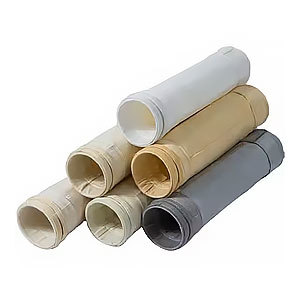
Ordinary polyester (PET): suitable for room temperature dry dust, with a cycle of 6-8 months;
PTFE coating: resistant to high humidity and corrosion, with a high humidity cycle of 7-9 months, which is 50% longer than ordinary models;
High temperature resistant polypropylene (PP): used in medium to high temperature scenarios, with a cycle of 5-7 months, which is longer in temperature resistance than ordinary polyester.
2、 Scenario based cycle: Corresponding table of common working conditions overseas
According to the high-frequency scenarios of overseas factories, directly correspond to the replacement cycle for easy matching:
Recommendations and replacement cycles for filter cartridges under different operating conditions
1. Low concentration dry dust at room temperature: commonly found in industries such as electronics and toy factories, it is recommended to use polyester coated filter media with a replacement cycle of 6-8 months.
2. Medium temperature and medium concentration dust: such as plastic granulation plants and printing and dyeing plants, suitable for high-temperature resistant polypropylene filter media, with a replacement cycle of 5-7 months.
3. High humidity and high viscosity dust: In environments such as Southeast Asian rubber factories and paper mills, PTFE hydrophobic membrane filter media is more suitable, with a replacement cycle of 4-6 months.
4. Mild corrosion dust: Faced with mild corrosion conditions such as acidic fruit powder in food factories and electroplating factories, 316L mesh+PTFE filter material can be used, with a replacement cycle of 5-8 months.
5. High concentration coarse dust: For furniture factories, mining crushing workshops and other high concentration coarse dust environments, it is recommended to use thickened polyester filter cartridges with a replacement cycle of 3-5 months.
3、 4 "Replace signals": Don't wait for failure before replacing to avoid compliance risks
Even if it is not within the estimated period, the following signals should be replaced in a timely manner to prevent fines for exceeding the standard:
1. Resistance continues to exceed the standard: the pressure gauge shows resistance greater than 1500Pa (normal 800-1200Pa), but it still cannot be reduced after cleaning, indicating that the filter cartridge is blocked;
2. Significant decrease in suction power: The wind force at the suction port weakens, making it difficult to remove dust, such as welding smoke residue from electronic factories and flour accumulation from food factories;
3. Excessive emission concentration: Use a portable detector to measure the emission outlet, and if the concentration is greater than 10mg/m ³ (European and American standards often ≤ 5mg/m ³), it indicates that the filter material has been damaged or penetrated;
4. Damage to the appearance of the filter cartridge: Upon opening the inspection door, cracks were found on the surface of the filter cartridge, the film had peeled off, or dust had leaked from the gaps in the filter cartridge.
4、 Foreign trade adaptation: extended cycle+compliance more worry free
Based on the characteristics of overseas regions, do two things well, which can not only extend the service life of the filter cartridge, but also meet local requirements:
1. Regional working condition adaptation:
Southeast Asia high humidity area: Install a pre dehumidifier to reduce water vapor entering the filter cartridge, which can extend the cycle by 20%;
High temperature zone in the Middle East: choose high-temperature resistant PTFE filter cartridges, matched with equipment insulation layers to avoid softening of filter materials;
European and American hygiene level scenarios (food/pharmaceutical): Use FDA certified filter cartridges, replace them regularly every 6 months, and keep records for auditing purposes.
2. Retention of compliance records:
After each replacement, record the "replacement date, filter cartridge model, service life, and emission testing data", which can be directly provided during EU EcoVadis audits and US EPA spot checks to avoid compliance accountability.
Summary: The cycle is not a "fixed number", but a "customized number of operating conditions"
For overseas factories, the replacement cycle of filter cartridges does not need to follow the trend. Instead, the basic cycle is determined based on the characteristics of the working conditions and the signal is used to determine the replacement position. By selecting the right filter material and doing a good job in pre-treatment, the filter cartridges can be used for their "best life" while avoiding excessive waste. By mastering this method, the replacement of filter cartridges can be carried out in a "non blind, non wasteful, compliant and stable" manner.
Hot Tags:


Contact Us
Tel:
WeChat:
WhatsApp:
E-mail:
Address:
338 National Road South, Longfengdian Village, Botou City, Hebei Province, China
JiuznTomine is expertly delivering technically complicated projects in markets & provides custom solutions for their customized need.


CONTACT INFO
Tel: +86 18531710311
WeChat: +86-18531710311
338 National Road South, Longfengdian Village, Botou City, Hebei Province, China