











Selection of Pulse Cyclone Dust Collector: From Air Volume to Material, Choose the Right Stability and Compliance Standards
Oct 09,2025

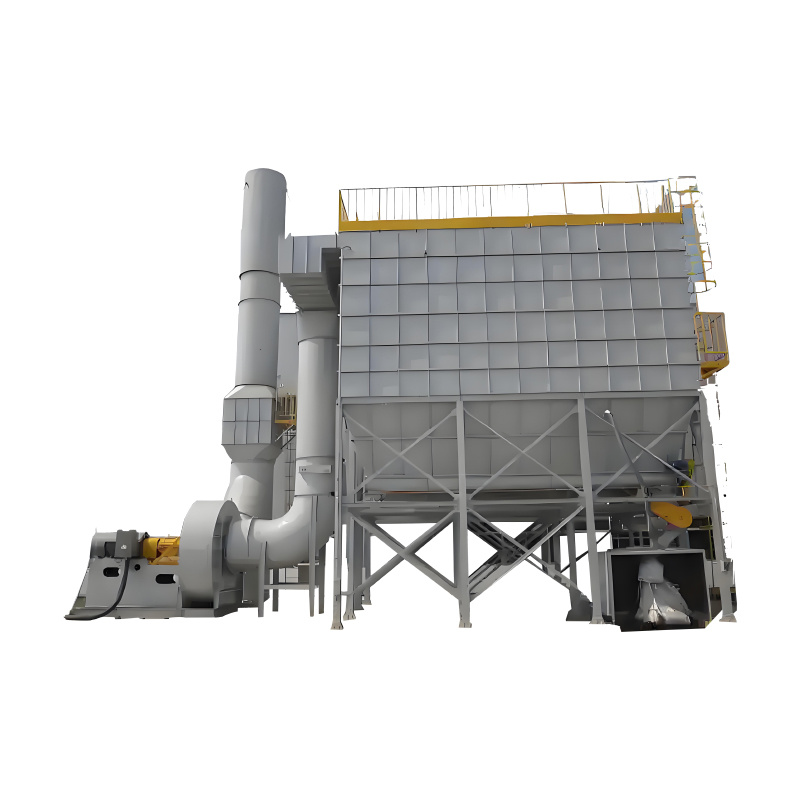
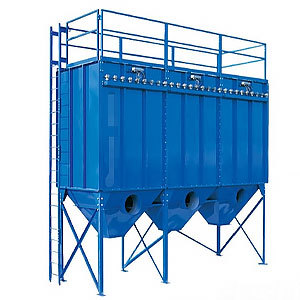
The pulse cyclone dust collector relies on "centrifugal separation+pulse cleaning", which is particularly suitable for coarse dust scenes such as mining, building materials, and chemical industries. If not selected correctly, overseas factories often encounter problems such as "insufficient air volume for suction" and "materials that are not resistant to working conditions and are prone to damage". In fact, from the core "air volume matching" to the key "material selection", by following the steps to accurately determine the plan, it can not only save costs, but also meet the EU CE and US EPA standards, and adapt to multiple regional working conditions.
1、 First set the air volume: the core parameters do not deviate, and dust removal is efficient
The air volume is the "basic threshold" of the pulse cyclone dust collector. Choosing a small amount of dust cannot completely absorb it, and choosing a large amount wastes energy consumption. Calculate the air volume according to 3 steps:
1. Calculate the "actual required air volume"
Calculated based on workshop dust generation points and ventilation requirements:
Per unit dust point (such as mine crusher): Reserved at 1.2 times the dust production rate, for example: 2000m ³ of dust production per hour, with a selected air volume of 2400m ³/h;
Multiple dust points (such as multiple production lines in a building materials factory): After summarizing the air volume at each point, add a 15% margin to avoid insufficient air volume during simultaneous operation.
2. Avoid "selection errors"
Do not blindly choose "large": if the air volume exceeds the actual demand by more than 30%, the power consumption of the fan will increase by 20%, which will instead lead to airflow disorder and a decrease in dust removal efficiency;
Don't ignore "negative pressure": High altitude areas (such as South American mines) need to choose high negative pressure models to avoid air volume attenuation caused by low air pressure.
3. Examples of adaptation scenarios
Southeast Asian small quarries: choose 1500-3000m ³/h air volume, small volume, easy to install;
Large cement plants in Europe: choose 10000-20000m ³/h high air volume models, equipped with multiple sets of cyclones, to meet continuous production.
2、 Choose another material: Determine the material according to the working conditions, and the equipment is three times more durable
The material of the shell, ash hopper, and cleaning components of the pulse cyclone dust collector directly determines its service life. Choose the right material according to the "temperature, humidity, and corrosiveness" of the dust:
1. Normal temperature drying condition (≤ 80 ℃, humidity<40%)
Scenario: Plastic dust from electronic factories, sawdust from furniture factories;
Material: Q235 carbon steel (shell)+ordinary steel plate ash hopper, low cost, daily maintenance only requires rust proof painting, suitable for normal temperature workshops in North America and Europe.
2. High humidity/dusty working conditions (humidity>60%)
Scenario: Southeast Asian rubber factories, Nordic paper mills;
Material: Galvanized carbon steel (shell, rust proof)+stainless steel ash hopper (with heating sleeve, anti dust agglomeration), to prevent rusting and air leakage of the shell within 6 months.
3. Medium to high temperature conditions (80-200 ℃)
Scenario: Middle Eastern chemical reactor dust, Indian metallurgical plant mineral powder;
Material: Q345 heat-resistant steel (shell, resistant to 200 ℃ high temperature)+ceramic lined ash hopper (wear-resistant) to prevent deformation of the shell caused by high temperature.
4. Mild corrosion conditions (including weak acid/weak alkali dust)
Scenario: Mild chloride dust in electroplating factory, acidic fruit powder in food factory;
Material: 304 stainless steel (in contact with dust components), compliant with US FDA standards, no metal ion migration, suitable for food and electronic compliance scenarios.
3、 Foreign trade adaptation: adding "regional customization" for easier implementation
Overseas selection should also be in line with local compliance and climate, to avoid being "out of place":
1. Compliance certification: Select models with CE and ATEX explosion-proof certification in the European and American markets, and ensure that the dust cleaning system complies with EN 12014 standards to avoid customs clearance obstacles;
2. Regional working condition adjustment:
High humidity area (Southeast Asia): Add a pre cyclone dehydrator to separate 70% of liquid water first, reducing the adhesion of wet dust;
Low temperature zone (Northern Europe): The shell is covered with insulation cotton to prevent condensation and freezing of dust in the ash hopper due to low temperature;
3. Installation adaptation: Provides a detachable shell, suitable for transportation and installation in narrow workshops overseas, and comes with a multilingual installation manual and video guidance.
Summary: Air volume determines foundation, material determines lifespan
For overseas factories, the selection of pulse cyclone dust collectors is not about "ordering based on parameters", but about "matching the air volume with the scene and matching the material with the working conditions". By accurately calculating the actual required air volume, selecting the right material based on temperature, humidity, and corrosion resistance, and adding regional customization, it can not only avoid the waste of "buying the wrong one and reworking", but also extend the equipment life to 5-8 years, easily achieving "efficient dust removal+compliance standards".
Hot Tags:


Contact Us
Tel:
WeChat:
WhatsApp:
E-mail:
Address:
338 National Road South, Longfengdian Village, Botou City, Hebei Province, China
JiuznTomine is expertly delivering technically complicated projects in markets & provides custom solutions for their customized need.


CONTACT INFO
Tel: +86 18531710311
WeChat: +86-18531710311
338 National Road South, Longfengdian Village, Botou City, Hebei Province, China