












How to Choose the Right Centrifugal Fan for Your Needs
Apr 05,2026
How to Choose the Right Centrifugal Fan for Your Needs
Table of Contents
1. Understanding Centrifugal Fans and Their Applications
2. Key Factors to Consider When Choosing a Centrifugal Fan
2.1 Airflow Requirements
2.2 Pressure Considerations
2.3 Fan Efficiency
3. Types of Centrifugal Fans
3.1 Backward Curved Fans
3.2 Forward Curved Fans
3.3 Radial Fans
4. Material Compatibili

How to Choose the Right Centrifugal Fan for Your Needs
Table of Contents
1. Understanding Centrifugal Fans and Their Applications
2. Key Factors to Consider When Choosing a Centrifugal Fan
2.1 Airflow Requirements
2.2 Pressure Considerations
2.3 Fan Efficiency
3. Types of Centrifugal Fans
3.1 Backward Curved Fans
3.2 Forward Curved Fans
3.3 Radial Fans
4. Material Compatibility and Durability
5. Motor Types and Their Impact on Performance
6. Installation and Maintenance Considerations
7. Frequently Asked Questions (FAQs)
8. Conclusion
1. Understanding Centrifugal Fans and Their Applications
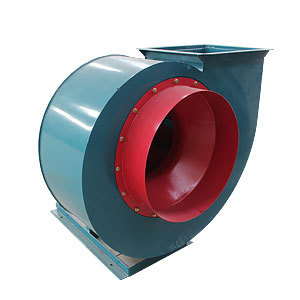
Centrifugal fans, also known as blowers, are essential components in various industrial applications, providing the necessary airflow for ventilation, cooling, exhaust, and material handling. These fans operate by converting rotational energy from a motor into kinetic energy, generating a significant increase in pressure and airflow. **Choosing the right centrifugal fan is crucial** for optimizing operational efficiency and ensuring the longevity of your system.
Centrifugal fans are widely utilized across industries such as HVAC, power generation, chemical processing, and food manufacturing. Understanding the specific needs of your application is the first step in making an informed choice.
2. Key Factors to Consider When Choosing a Centrifugal Fan
When selecting a centrifugal fan, various factors influence its performance and suitability for your specific requirements. Below, we outline the most critical considerations to keep in mind.
2.1 Airflow Requirements
Airflow is measured in cubic feet per minute (CFM) and is a vital parameter in fan selection. It is essential to determine the required airflow for your application accurately. Too little airflow can result in inadequate cooling or ventilation, while too much can lead to energy inefficiency.
To calculate the required CFM, consider the size of the space, the number of air exchanges per hour desired, and any specific application requirements. Utilize airflow calculation tools or consult with a professional for precise measurements.
2.2 Pressure Considerations
Pressure, measured in inches of water gauge (WG), is another significant factor in fan selection. Centrifugal fans generate static pressure, which must overcome the resistance created by ductwork, filters, and other system components.
Understanding the total pressure requirements for your system is essential. This includes both the static pressure needed to push air through the system and any additional pressure required for specific applications.
2.3 Fan Efficiency
Efficiency is a crucial metric that can impact operational costs significantly. **Look for fans with high efficiency ratings**, typically denoted by the fan's performance curve. A more efficient fan will require less energy to move the same volume of air, resulting in lower operational costs over time.
When evaluating efficiency, consider factors such as motor type, fan design, and operational speed. Selecting a fan that operates near its best efficiency point (BEP) will ensure optimal performance.
3. Types of Centrifugal Fans
Centrifugal fans come in various designs, each tailored for specific applications. Understanding these types can aid in making an informed selection.
3.1 Backward Curved Fans
Backward curved fans are designed with blades that curve against the direction of rotation. They are known for their high efficiency and are ideal for applications requiring constant airflow. Their robust design makes them suitable for handling particulate-laden air and high-pressure applications.
3.2 Forward Curved Fans
Forward curved fans have blades that curve in the direction of rotation. They are typically quieter and more compact, making them suitable for light-duty applications. However, they may not perform as efficiently under high-pressure conditions.
3.3 Radial Fans
Radial fans offer a simpler design with blades that extend radially from the hub. They provide a robust solution for handling larger volumes of air at lower pressures. These fans are common in industrial applications where durability is essential.
4. Material Compatibility and Durability
The materials used in the construction of the centrifugal fan are paramount for ensuring its longevity and performance. Consider the following aspects:
- **Corrosion Resistance**: If the fan is exposed to corrosive elements, it’s essential to select materials such as stainless steel or plastic that can withstand such conditions.
- **Temperature Tolerance**: High-temperature applications require fans made from heat-resistant materials to prevent deformation or failure over time.
- **Abrasion Resistance**: For applications involving particulate matter, choose fans with abrasion-resistant coatings or materials to prolong their lifespan.
5. Motor Types and Their Impact on Performance
The type of motor used in a centrifugal fan plays a significant role in its overall performance and energy efficiency. The most common motor types include:
- **AC Motors**: Widely used for their reliability and ease of maintenance. They are available in single-phase and three-phase configurations and are suitable for various applications.
- **DC Motors**: Offer higher efficiency and speed control but may be pricier. They are ideal for applications requiring precise airflow adjustments.
- **Variable Frequency Drives (VFDs)**: Allow for adjustable motor speeds, enhancing energy efficiency and providing flexibility for varying operational demands.
When selecting a motor, consider both the power requirements and the specific application needs to ensure optimal performance.
6. Installation and Maintenance Considerations
Proper installation and maintenance are critical for maximizing the performance and longevity of your centrifugal fan. Key considerations include:
- **Location**: Ensure the fan is installed in an appropriate location to minimize noise and ensure efficient airflow.
- **Vibrations**: Proper mounting and balancing are necessary to reduce vibrations that can lead to premature wear.
- **Regular Maintenance**: Establish a routine maintenance schedule to inspect and clean the fan, check for wear on components, and ensure all electrical connections are secure.
By adhering to these guidelines, you can ensure your centrifugal fan operates efficiently and effectively throughout its lifespan.
7. Frequently Asked Questions (FAQs)
7.1 What is the difference between centrifugal fans and axial fans?
Centrifugal fans use rotational energy to move air at right angles to the intake, while axial fans move air parallel to the intake, making centrifugal fans better for high-pressure applications.
7.2 How do I determine the right size centrifugal fan for my application?
Calculate the required airflow (CFM) and pressure (WG) for your system, considering duct resistance and application needs. Consult manufacturer guidelines for specific fan sizes.
7.3 Can I use a centrifugal fan in a high-temperature environment?
Yes, but ensure the fan is constructed from heat-resistant materials suitable for the specific temperature range of your application.
7.4 What maintenance is required for centrifugal fans?
Regularly inspect and clean fan components, check for wear, ensure proper lubrication, and monitor electrical connections for optimal performance.
7.5 How can I improve the energy efficiency of my centrifugal fan?
Select high-efficiency fan models, use variable frequency drives for speed control, and ensure proper duct design to minimize resistance.
8. Conclusion
Choosing the right centrifugal fan for your needs involves careful consideration of several key factors, including airflow and pressure requirements, fan types, material compatibility, motor types, and installation practices. By taking the time to evaluate these aspects and consulting with experts when necessary, you can ensure optimal performance and efficiency for your industrial applications. With the right centrifugal fan, you can achieve the desired airflow and pressure while minimizing energy costs and maximizing system durability. Make informed decisions, and your operational efficiency will follow.
Hot Tags:
PREVIOUS:

Contact Us
Tel:
WeChat:
WhatsApp:
E-mail:
Address:
338 National Road South, Longfengdian Village, Botou City, Hebei Province, China
JiuznTomine is expertly delivering technically complicated projects in markets & provides custom solutions for their customized need.


CONTACT INFO
Tel: +86 18531710311
WeChat: +86-18531710311
338 National Road South, Longfengdian Village, Botou City, Hebei Province, China