











Cyclone dust removal equipment: optimal selection of energy-saving and environmentally friendly coarse dust treatment
Sep 05,2025

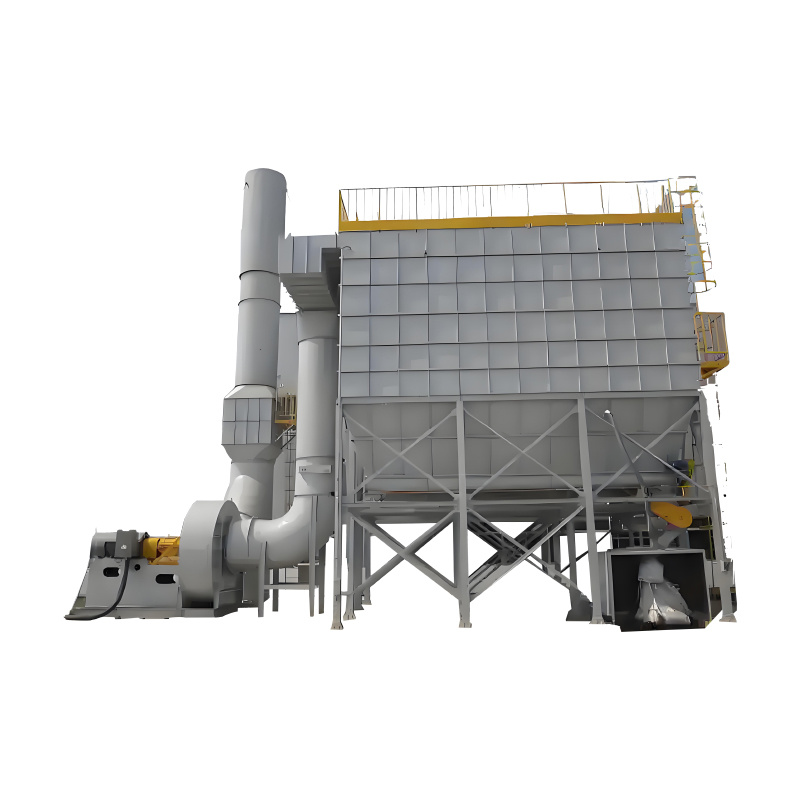
In overseas industrial dust removal scenarios, not all working conditions require "high-precision" equipment - for small and medium-sized factories that mainly produce coarse dust such as mining crushing, building material screening, and grain processing, cyclone dust removal equipment has become a cost-effective choice due to its energy-saving and environmental protection advantages of "low energy consumption, low cost, and easy maintenance". It does not require complex filter materials and can efficiently separate dust solely by centrifugal force, meeting basic environmental requirements and helping factories save real money, perfectly adapting to the practical needs of the foreign trade market.
1、 The core logic of energy conservation and environmental protection: filter free design, reducing consumption from the source
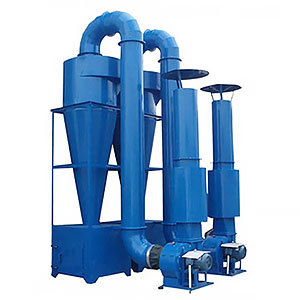
The environmental and energy-saving advantages of cyclone dust removal equipment stem from its core principle of "physical separation": the dusty gas enters from the tangent line of the equipment inlet, forming a high-speed rotating airflow inside the cylinder. The dust is thrown towards the cylinder wall due to centrifugal force and falls into the ash hopper along the wall. After purification, the gas is discharged from the top outlet. The entire process does not require consumables such as filter bags or cartridges, nor does it require a high-pressure pulse dust cleaning system, which reduces energy consumption and waste from the root. The specific advantages are reflected in three points:
1. Low energy consumption: The fan load is small, saving half of the electricity bill
Compared to bag filters that require overcoming filter material resistance, the airflow resistance of cyclone dust removal equipment is only 800-1200Pa, which is 30% -40% lower than that of bag filters with the same air volume. Taking a device with a processing capacity of 10000 m ³/h as an example, the power of the cyclone dust collector fan is about 7.5 kW, while the bag filter requires 11 kW. Under 24-hour operation, it can save 84 kWh of electricity per day. Calculated based on the European and American industrial electricity price of 0.15 USD/kWh, the annual electricity cost savings exceed 4500 USD.
For regions with high electricity costs or unstable power supply such as Africa and Southeast Asia, low-energy design can also reduce the risk of power outages.
2. Zero consumables: No filter material replacement, almost zero operation and maintenance costs
Traditional bag dust collectors need to replace their filter bags 2-3 times a year, with a cost of $50-200 per bag, while cyclone dust collectors have no vulnerable filter materials and only require regular cleaning of the ash hopper.
At the same time, the design without filter materials also reduces the generation of solid waste - based on an annual output of 10 tons of waste filter bags, the cyclone equipment can reduce the amount of hazardous waste disposal by about 0.5 tons per year, which complies with the EU Waste Framework Directive and avoids fines for improper solid waste treatment.
3. Resource recycling: Direct recovery of coarse dust, turning waste into treasure
The coarse dust collected by the cyclone dust removal equipment is dry and free of impurities, and can be directly recycled without additional processing:
Building materials factory: Recycled cement powder is recycled and reused, saving $8000 in raw material costs annually;
Grain factory: The collected wheat grains can be processed into feed, adding additional revenue to the factory;
Mining: Recycled ore powder is used to fill roadbeds, reduce tailings stacking land occupation, and align with the concept of "circular economy", which is particularly important for European and American customers who value environmental image.
2、 Adaptation scenario: "Efficient solution" for coarse dust working conditions
Although cyclone dust removal equipment is not good at handling fine dust, it performs far better than expected in industrial scenarios dominated by coarse dust, especially suitable for three types of overseas factories:
1. Mines and quarries: resistant to high dust and wear and tear
The dust concentration and particle size in the crushing section of mines in Africa and the Middle East are high. The cyclone equipment adopts thickened steel plate shells and wear-resistant coatings on the inner walls, which can withstand high concentration dust erosion. The equipment has a lifespan of 5-8 years, which is three times longer than ordinary carbon steel equipment.
2. Building materials factory: Suitable for high temperatures, no hidden dangers of filter materials
The flue gas temperature in cement plants and brick and tile factories often reaches 150-200 ℃. Ordinary filter bags are prone to softening and damage, while cyclone equipment has no filter material and can directly process high-temperature gases without the need for a cooling system.
3. Grain and feed factories: anti clogging, easy to clean
The dust in Southeast Asian grain processing workshops is prone to moisture absorption and clumping, and traditional filter bags are prone to clogging. However, there are no dead corners inside the cyclone equipment, and the inclination angle of the ash hopper is ≥ 60 °, making it difficult for dust to accumulate. The ash hopper only needs to be cleaned once a week.
3、 Summary: Cyclone dust removal, the "king of environmental cost-effectiveness" for small and medium-sized factories
For overseas small and medium-sized factories, cyclone dust removal equipment is not a "transitional choice", but a "precise matching" - it uses filter free material design to achieve energy conservation and environmental protection, reduces costs with low energy consumption and zero consumables, adapts to complex working conditions with wear resistance and easy maintenance, and can also meet global compliance needs through customization.
Hot Tags:


Contact Us
Tel:
WeChat:
WhatsApp:
E-mail:
Address:
338 National Road South, Longfengdian Village, Botou City, Hebei Province, China
JiuznTomine is expertly delivering technically complicated projects in markets & provides custom solutions for their customized need.


CONTACT INFO
Tel: +86 18531710311
WeChat: +86-18531710311
338 National Road South, Longfengdian Village, Botou City, Hebei Province, China