











Spiral conveyor: the choice of efficient and reliable conveying equipment
Aug 14,2025
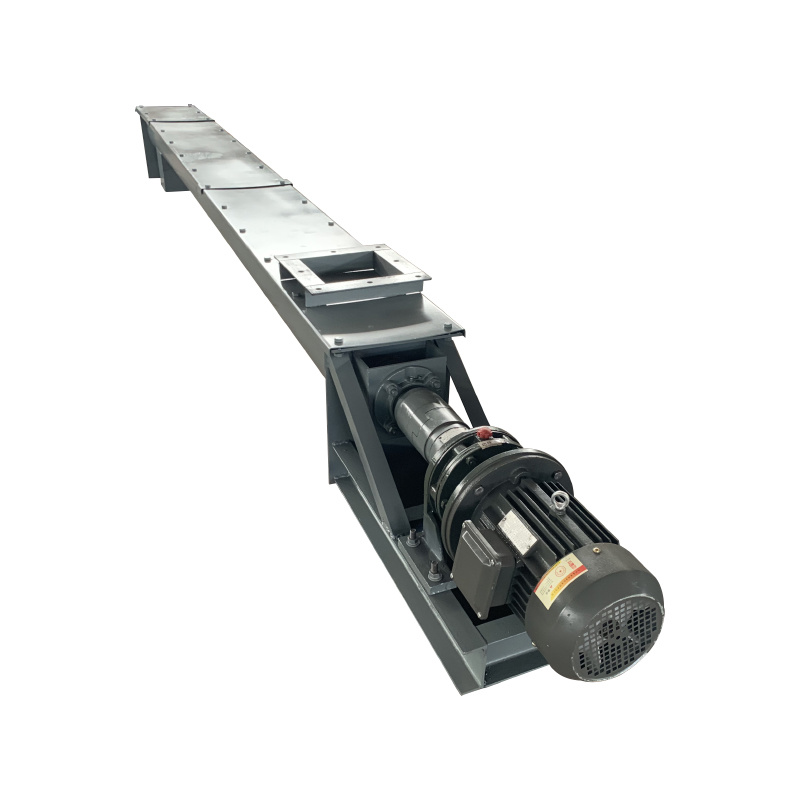
In the field of industrial material conveying, screw conveyors have become the core equipment in many industries due to their compact structure and stable conveying characteristics. As a key tool for continuous transportation of bulk materials, it can not only adapt to diverse working conditions, but also meet the standards and specifications of different global markets, making it a highly favored transportation solution in foreign trade business.
1、 Structure and Principle: Efficient Logic in Concise Design
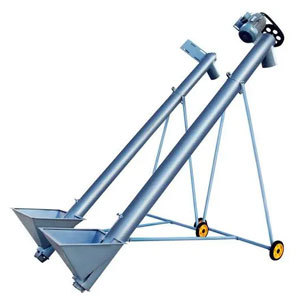
The screw conveyor is mainly composed of a driving device, spiral blades, a casing, and an inlet and outlet. Its working principle is based on the rotating spiral blades pushing the material to move along the axis of the casing - the friction between the spiral surface of the blades and the material causes the material to rotate with the blades, while being transported forward under the constraints of gravity and the casing, achieving continuous transportation in horizontal, inclined or vertical directions.
The design of core components directly affects performance: spiral blades are formed by cold rolling or welding processes to ensure uniform pitch and smooth conveying surface, reducing material residue; The casing is seamlessly welded, and the flanges at both ends are tightly sealed to prevent dust leakage, meeting the sealing requirements for dust environments in the EU ATEX explosion-proof standard.
2、 Core feature: Multiple advantages of adapting to industrial transportation
1. Strong sealing: The fully enclosed casing design can effectively prevent material dust and leakage, especially suitable for transporting dust prone materials such as cement and flour, and can meet GMP cleanliness requirements in the food and pharmaceutical industries.
2. Wide adaptability: It can transport granular, powdery, and small block materials, and adapt to different flowability materials by changing the blade form - solid spiral is suitable for dry powder materials, and belt spiral is suitable for viscous materials.
3. Compact structure: With a small footprint, it can be flexibly arranged in narrow workshop spaces and seamlessly integrated with other equipment, especially suitable for automated production line integration.
4. Precise control: Paired with a variable frequency motor, the conveying speed can be adjusted to achieve precise control of material flow, meeting the strict requirements of proportioning and conveying in the chemical industry.
3、 Applicable scenarios: Cross industry transportation solutions
The universality of screw conveyors makes them widely used in various industries around the world:
1. Building materials industry: transporting cement, lime, sand and gravel, etc. In the production lines of European cement plants, inclined screw conveyors can accurately feed raw materials from the silo into the mill, with a conveying efficiency of 50-200m ³/h.
2. Grain processing: Processing wheat, corn, starch, etc. In the US grain storage system, stainless steel screw conveyors can avoid material contamination and meet FDA food contact standards.
3. Chemical industry: Transporting fertilizers, plastic pellets, etc., models made of 316L stainless steel material can withstand acid and alkali corrosion and perform stably in pesticide factories in Southeast Asia.
4. Environmental protection field: Processing waste incineration fly ash, sludge, etc. Wear resistant models with lining plates can extend their service life and adapt to high load conditions of waste treatment projects in the Middle East.
4、 Key points for international market selection and adaptation
1. Material adaptation: Select materials based on target market conditions - carbon steel for room temperature and dry environments, 304 stainless steel for the food and pharmaceutical industry, 316L stainless steel for high temperature or corrosive environments, in compliance with EU REACH restrictions on heavy metals.
2. Standard compliance: Exporting to the European Union requires CE certification, the North American market requires compliance with ASME B20.1 safety standards, and the Russian market requires GOST certification to ensure smooth customs clearance of equipment.
Spiral conveyors have become the backbone of the industrial conveying field due to their characteristics of high efficiency, reliability, and wide adaptability. For foreign trade customers, choosing models that meet the standards of the target market and are suitable for local working conditions can not only improve production efficiency, but also reduce cross-border after-sales risks, making it a practical choice to connect the global supply chain.
Hot Tags:


Contact Us
Tel:
WeChat:
WhatsApp:
E-mail:
Address:
338 National Road South, Longfengdian Village, Botou City, Hebei Province, China
JiuznTomine is expertly delivering technically complicated projects in markets & provides custom solutions for their customized need.


CONTACT INFO
Tel: +86 18531710311
WeChat: +86-18531710311
338 National Road South, Longfengdian Village, Botou City, Hebei Province, China