











Spiral conveyor and scraper: selection of dust conveying equipment at the bottom of ash hopper
May 22,2026

In industrial dust removal systems, although the ash conveying equipment at the bottom of the dust collector hopper is inconspicuous, it is a key link to ensure the continuous and stable operation of the entire system. If the selection is improper, it can easily lead to dust accumulation, material blockage, and even system shutdown. How to make precise choices based on actual working conditions when facing the two most common mechanical conveying equipment - screw conveyor and scraper conveyor? The following will provide a deep analysis from three dimensions: core principles, comparison of advantages and disadvantages, and applicable scenarios.
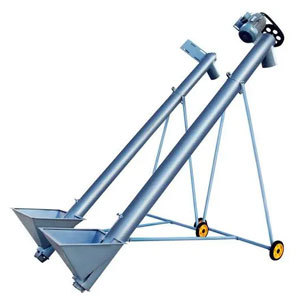
1、 Spiral conveyor: the cost-effective choice for short distance enclosed conveying
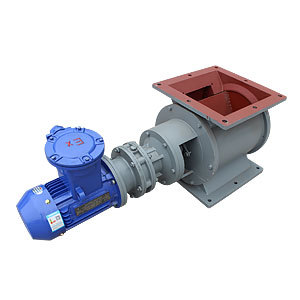
The screw conveyor (commonly known as the "auger") uses a motor to drive the rotating spiral blades inside, pushing the dust that falls into the ash hopper forward along the fixed shell. It is usually used in combination with a star shaped unloader (rotary valve) to achieve continuous ash discharge and good air lock sealing.
1. Core advantages: Extremely simple and compact structure, low manufacturing cost, fully enclosed design can effectively eliminate secondary dust. Maintenance is very convenient and can handle damp dust with certain viscosity or easy clumping.
2. Limitations: Due to the limitations of the intermediate suspension bearings, the single machine conveying distance is relatively short, and excessively long distances can lead to increased wear on the blades and shell. In addition, when dealing with materials with extremely strong grinding properties, the rate of blade loss is relatively fast.
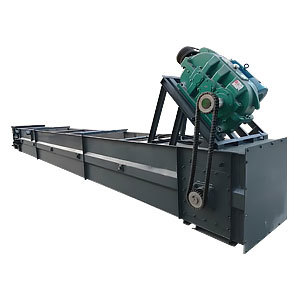
2、 Scraper Conveyor: Stable Responsibility for Long Distance Heavy Load Conveying
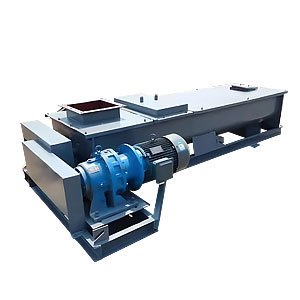
The scraper conveyor uses a closed-loop chain to drag the scraper and slide the animal material forward in a closed rectangular groove. It is often used for centralized ash collection of multiple ash hoppers or long-distance horizontal/inclined conveying.
3. Core advantage: It has excellent long-distance transportation capability and a low body height, making it easy to arrange in factories with limited space. Its fully enclosed structure is also environmentally friendly and can withstand high temperatures, high concentrations, and dust conditions with strong abrasion resistance, making it extremely stable in operation.
4. Limitations: Due to the significant sliding friction between the chain, material, and tank, the operating power consumption is high, which requires higher requirements for the motor. At the same time, the mechanical structure of chains and scrapers is relatively complex, and the later maintenance and repair workload is greater than that of screw conveyors.
3、 Comparison of core differences and selection suggestions
To make decisions more intuitively, we can compare the differences between the two from the following core dimensions:
In terms of conveying distance, screw conveyors are suitable for short distance conveying within 30 meters; The scraper conveyor is capable of handling medium to long distances of over 80 meters. In terms of energy consumption performance, screw conveyors have lower operating resistance and are more energy-efficient; Scraper conveyors have relatively high energy consumption due to high friction.
Regarding material adaptability, screw conveyors are more suitable for handling dust that is sticky, damp, or prone to clumping; Scraper conveyor performs better in dealing with high temperature, high concentration, and strong abrasive hard dust. In terms of maintenance complexity, the structure of the screw conveyor is simple and daily maintenance is very convenient; The chain components of the scraper conveyor are relatively complex, and the maintenance workload in the later stage is relatively large. Finally, in terms of initial investment cost, screw conveyors have high cost-effectiveness and low cost; The equipment and installation cost of scraper conveyor are relatively high.
4、 Selection Practical Guide
5. Look at distance and layout: If it is a short distance on-site ash discharge of a single ash hopper, priority should be given to using a screw conveyor; If it is necessary to collect dust from multiple dispersed ash hoppers, or if the conveying distance exceeds 30 meters, a scraper conveyor is a more reliable choice.
6. Check the characteristics of dust: For ordinary dust that is dry and has good fluidity, both can be used; If the dust has strong viscosity or high humidity, the screw conveyor is not easily blocked; If the dust temperature is high, the particles are hard, and the abrasiveness is strong, the durability of the scraper is better.
7. Check the operation and maintenance budget: pursue low initial investment and simple daily maintenance, choose spiral; If the production continuity requirement is extremely high and can accept regular chain maintenance, choose a scraper.
There is no absolute superiority or inferiority between screw conveyors and scraper conveyors, only the difference in whether they meet the working conditions. In practical selection, comprehensive consideration of conveying distance, dust physical and chemical characteristics, and long-term operation and maintenance costs of the factory are necessary to select the most reliable "cleaner" for the bottom of the ash hopper, ensuring the long-term and efficient operation of the dust removal system.
Hot Tags:
PREVIOUS:

Contact Us
Tel:
WeChat:
WhatsApp:
E-mail:
Address:
338 National Road South, Longfengdian Village, Botou City, Hebei Province, China
JiuznTomine is expertly delivering technically complicated projects in markets & provides custom solutions for their customized need.


CONTACT INFO
Tel: +86 18531710311
WeChat: +86-18531710311
338 National Road South, Longfengdian Village, Botou City, Hebei Province, China