












Hand in hand teaching you: Daily maintenance and troubleshooting of cyclone dust collectors
Apr 11,2026

Cyclone dust collectors are widely used in various industries for dust pretreatment and coarse dust removal due to their simple structure and low energy consumption. Their long-term stable operation relies on standardized daily maintenance and timely troubleshooting. This article focuses on practical operation, simplifying the maintenance process and troubleshooting methods, and providing hands-on guidance for foreign trade practitioners and operation and maintenance personnel to complete daily equipment management. It is highly practical.
1、 Daily maintenance: simple and easy to operate, laying a solid foundation for equipment operation
The daily maintenance of the cyclone dust collector does not require professional skills, but focuses on the three core elements of "cleaning, inspection, and protection", and can be operated periodically. The specific steps are as follows:
1. Regular cleaning: Check and clean the ash accumulation in the ash hopper daily to avoid excessive ash accumulation blocking the discharge port. It is recommended to clean it once a day after stopping the machine; Clean the inner walls of the equipment weekly to remove dust and dirt deposits, and prevent dust clumping from affecting dust removal efficiency; Clean the air inlet and outlet pipes every month to avoid dust accumulation in the pipes, which may cause a decrease in air volume.
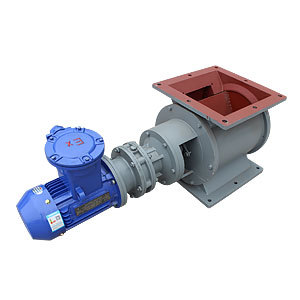
2. Routine inspection: Daily inspection of equipment seals (air inlet, air outlet, ash hopper connection), check for dust leakage, and replace damaged gaskets in a timely manner; Check the operation status of the unloading device weekly to ensure flexible rotation and no jamming, and regularly add lubricating oil; Inspect the equipment casing monthly for corrosion and deformation, with a focus on checking for cracks at the welding joints.
3. Regular protection: anti-corrosion treatment should be carried out on the equipment casing every quarter, especially in the case of corrosive dust, to avoid rusting of the casing; Inspect the internal guide vanes of the equipment annually for wear and deformation, and adjust or replace them promptly to ensure even airflow distribution.
2、 Troubleshooting: Accurately locate the problem, quickly solve it without affecting production
The common faults of cyclone dust collectors are often related to dust accumulation, sealing, and abnormal airflow. The following practical scenarios will teach you how to locate and solve problems step by step, making it concise and efficient:
1. Fault 1: Decreased dust removal efficiency
Key points of investigation: Firstly, check whether there is excessive ash accumulation in the ash hopper and whether the unloading device is stuck, which may cause secondary dust flying; Check again if the air inlet duct is blocked and the airflow cannot circulate normally; Finally, check if there is too much fouling on the inner wall of the equipment, which affects the rotation effect of the airflow.
Solution: Clean the ash hopper and pipeline in a timely manner, and inspect the unloading device; Clean the dirt on the inner wall of the equipment to ensure smooth airflow; If the dust particle size is too large, pre-treatment equipment can be used in combination.
2. Fault 2: Excessive noise during equipment operation
Key points of investigation: Focus on checking whether the bearings of the unloading device are worn or lack oil; Check if the device casing is deformed or loose, and if it is securely connected to the bracket; Check if the airflow at the inlet is turbulent and if there is an impact of airflow on the casing.
Solution: Add lubricating oil to the bearings of the unloading device and replace them in a timely manner when they are severely worn; Tighten the equipment bracket and shell connection parts, correct the deformed shell; Adjust the inlet airflow velocity to avoid turbulence.
3. Fault 3: Dust leakage
Key points of investigation: Check whether the sealing gasket is aged or damaged, with a focus on the connection between the air inlet and the ash hopper flange; Check for cracks, corrosion, and perforation on the device casing; Check the sealing performance of the unloading device and whether there is any ash leakage.
Solution: Replace the aging or damaged sealing gasket and re tighten the flange connection; Repair cracks and perforations in the shell and perform anti-corrosion treatment; Repair the unloading device and improve the sealing performance.
4. Fault 4: Abnormal equipment vibration
Key troubleshooting points: Check if the equipment is installed horizontally and if the brackets are loose; Check if the internal guide vanes are deformed or detached, causing an imbalance in airflow; Check for abnormal operation of the unloading device, resulting in resonance.
Solution: Adjust the level of equipment installation and tighten the bracket; Replace deformed or detached guide vanes; Repair the unloading device and eliminate resonance issues.
Summary: The core of daily maintenance for cyclone dust collectors lies in "regular cleaning and timely inspection". Troubleshooting should follow the principle of "easy first, difficult later, and precise positioning". Without the need for complex tools, following the steps in this article can ensure the long-term stable operation of the equipment, reduce operation and maintenance costs, and adapt to the needs of various industries' coarse dust removal scenarios.
Hot Tags:


Contact Us
Tel:
WeChat:
WhatsApp:
E-mail:
Address:
338 National Road South, Longfengdian Village, Botou City, Hebei Province, China
JiuznTomine is expertly delivering technically complicated projects in markets & provides custom solutions for their customized need.


CONTACT INFO
Tel: +86 18531710311
WeChat: +86-18531710311
338 National Road South, Longfengdian Village, Botou City, Hebei Province, China