












Dust removal skeleton design: how to improve the service life of filter bags?
Mar 26,2026

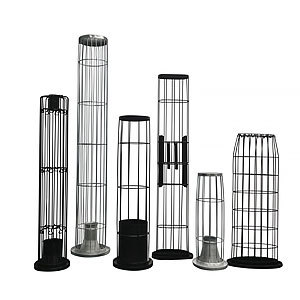
In the operation system of bag filter, the dust removal skeleton is the core component that supports the filter bag. Although it may seem insignificant, it directly determines the rate of loss and overall service life of the filter bag. Unreasonable skeleton design can cause filter bag wear, tear, sticking, and blockage, significantly shortening the replacement cycle and increasing operation and maintenance costs.
1、 Compatibility between skeleton size and filter bag
Size mismatch is the primary cause of filter bag damage, and controlling the fit is crucial. The outer diameter of the skeleton should be slightly smaller than the inner diameter of the filter bag, and a reasonable gap should be reserved. If the gap is too small, it will make it difficult to install the filter bag, and forced assembly may easily scratch the bag body; The gap is too large, and the filter bag shakes too much during dust cleaning. Repeatedly rubbing the skeleton can easily cause damage and fuzzing.
The length of the skeleton must be accurately matched with the filter bag, and the length error should be controlled within a very small range. If the length is too long, it will press against the flower board, causing wrinkles and accumulation at the bottom of the filter bag; The length is too short, and the bottom of the filter bag is suspended. During dust cleaning, the airflow impact can easily cause fatigue and damage to the bottom of the bag. In addition, the verticality of the skeleton should also meet the standard to prevent wear and tear on one side of the filter bag under stress.
2、 Surface technology: prevent scratches on the filter bag
The material of the filter bag is relatively soft, and any burrs, welding scars, or edges on the surface of the skeleton will scratch the filter bag during operation and cleaning, forming dust leakage points. A qualified dust removal framework must have a smooth surface treatment.
It is recommended to use anti-corrosion and smooth processes such as galvanizing, spraying, and organic silicon spraying, which not only prevent rust but also reduce the friction between the filter bag and the frame. The welding area should be polished flat to prevent virtual welding, missed welding, and slag protrusion. The connection between vertical and horizontal bars should maintain a smooth transition. In the face of corrosive dust, high temperature and high humidity working conditions, it is preferred to use corrosion-resistant coating skeleton to avoid rough surface after rusting, which will aggravate the wear of filter bags.
3、 Reinforcement design: Balancing support and breathability
The layout of the reinforcing bars directly affects the stress and cleaning effect of the filter bag. Unreasonable design can cause excessive local stress on the filter bag or incomplete cleaning, resulting in bag sticking.
The number of vertical bars should be moderate. If the number is too small and the skeleton support is insufficient, the filter bag is prone to collapse and deformation during negative pressure operation, and fatigue damage may occur due to long-term bending; Excessive quantity will reduce the filtering area, hinder airflow, and increase the friction area of the filter bag. The spacing between horizontal bars should not be too dense, ensuring the rigidity of the skeleton while leaving sufficient breathable space to allow dust to fall off smoothly and avoid dust accumulation adhering to the inside of the filter bag. Usually, styles with multiple vertical bars and equidistant distribution are chosen to ensure even stress distribution on the filter bag.
4、 Structural details: reduce fatigue damage
Detail design can often significantly extend the lifespan of filter bags and avoid common structural shortcomings. The top and bottom of the skeleton should be treated with mouth protection, and smooth protective rings should be installed to avoid cutting the filter bag mouth and prevent the filter bag from falling off.
The equipment for pulse cleaning should be adapted to the cleaning airflow to prevent the top from hitting the upper opening of the filter bag. Try to use an integrated skeleton to reduce segmented splicing, which can easily cause gaps and protrusions at the splicing point, scratching the filter bag; It must be used in sections, and the interface should be polished smooth and connected firmly. In addition, suitable materials should be selected according to the operating temperature to prevent deformation of the skeleton and loss of support under high temperatures.
5、 Supporting installation and operation tips
In addition to qualified design, standardized use can also protect the filter bag: handle gently during installation, strictly prohibit dragging the skeleton to prevent deformation; After installation, check whether the filter bag is flat, without wrinkles or compression; Regularly inspect the deformation, corrosion, and damage of the skeleton, and promptly replace the failed skeleton; Cooperate with reasonable cleaning parameters to reduce the repeated collision of filter bags with the skeleton.
The core of extending the service life of filter bags lies in achieving precise size, smooth surface, uniform force distribution, and stable structure of the dust removal skeleton. Choosing the right skeleton that is suitable for the working conditions, doing a good job in detailed design and standardized operation and maintenance, can not only reduce filter bag loss and replacement frequency, but also ensure stable dust removal efficiency and reduce overall operation and maintenance costs.
Hot Tags:

Contact Us
Tel:
WeChat:
WhatsApp:
E-mail:
Address:
338 National Road South, Longfengdian Village, Botou City, Hebei Province, China
JiuznTomine is expertly delivering technically complicated projects in markets & provides custom solutions for their customized need.


CONTACT INFO
Tel: +86 18531710311
WeChat: +86-18531710311
338 National Road South, Longfengdian Village, Botou City, Hebei Province, China