











Core of daily operation and maintenance of bag filter: Inspection and maintenance guide for filter bag status
Dec 11,2025
The dust removal efficiency and operational stability of a bag filter depend on the filtering performance of the filter bag - as the core component for capturing dust, the integrity and cleanliness of the filter bag directly affect the purification effect, energy consumption level, and service life of the equipment. In daily operation and maintenance, neglecting the inspection of filter bag status can easily lead to problems such as dust leakage, abnormal equipment resistance, and damaged filter bags. This not only increases environmental risks but also increases operation and maintenance costs.
1、 The core dimension of filter bag status inspection: comprehensive coverage from "appearance" to "performance"
The status inspection of filter bags is not simply about "looking at the appearance", but requires a combination of physical form, operating parameters, and filtration effect to determine whether they are in normal working condition from four core dimensions, in order to avoid operational hazards caused by missing local details.
1. Physical integrity: the foundation for preventing "damage and dust leakage"
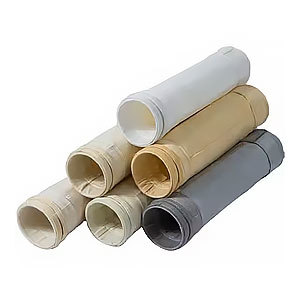
Damaged filter bags are the most common malfunction of bag filters. Once damaged, dusty airflow will directly escape from the damaged area, causing a sudden increase in dust concentration at the outlet and even exceeding environmental standards. During inspection, it is important to pay close attention to three vulnerable areas: firstly, the connection between the upper opening of the filter bag and the bag cage, which is susceptible to seam cracking or filter material tearing due to installation tension and airflow impact; Secondly, in the middle of the filter bag, if the workshop dust contains hard particles, long-term erosion can easily cause wear and perforation of the filter material; The third is the sealing between the lower opening of the filter bag and the flower board. If the sealing is not tight or the filter bag shrinks and deforms, it will form a dust leakage channel.
2. Cleanliness status: key to avoiding "clogging and dust accumulation"
During the filtration process of the filter bag, dust will adhere to the surface of the filter material to form a "dust layer". Under normal circumstances, the pulse cleaning system will regularly peel off the dust layer to ensure the transparency of the filter bag. If the cleanliness is insufficient, the dust layer will gradually thicken, leading to increased equipment resistance, increased fan energy consumption, and even the phenomenon of "bag sticking". There are two aspects to judge during inspection: first, observe the surface of the filter bag after dust cleaning. If there is still a large area of thick dust layer attached and it shows a compacted state, it indicates that the dust cleaning is not thorough; The second is to monitor the operating resistance of the equipment. If the resistance continues to be higher than the design value and after excluding the fan fault, it is highly likely that it is caused by dust accumulation and blockage in the filter bag.
3. Aging degree of filter material: the basis for predicting "performance degradation"
The filter material of the filter bag will gradually age due to environmental factors, leading to a decrease in filtration accuracy and strength. The core causes of aging include high temperature, chemical corrosion, ultraviolet radiation, etc. When inspecting, attention should be paid to the appearance changes and physical properties of the filter bag: if the filter bag shows obvious discoloration, brittleness, shrinkage deformation, it indicates that aging has occurred; In terms of physical properties, if the filter bag frequently experiences fiber shedding under normal cleaning pressure, or if there is obvious "fiber dust" in the filtered gas, it indicates that the filter material structure has been damaged and needs to be replaced in a timely manner.
4. Installation fit: a prerequisite for ensuring "sealed filtration"
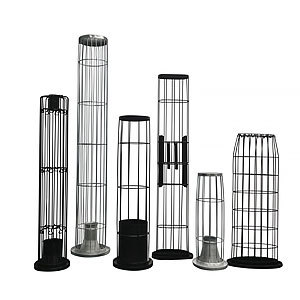
The installation fit between the filter bag, bag cage, and flower board directly affects the filtration effect. Even if the filter bag itself is intact, improper installation can lead to "short circuit and dust leakage". The key inspection points include: whether the filter bag is vertically suspended. If it is skewed, it is easy to cause local wear due to friction with the bag cage; Is the clamp on the upper opening of the filter bag locked? If it is loose, it will cause the filter bag to shift and dust to enter the clean air chamber through the gap; The matching degree between the bag cage and the filter bag. If the diameter of the bag cage is too small, the filter bag will not fit tightly, which will affect the cleaning effect; If the diameter is too large, it will stretch the filter bag and cause the stitching to break under stress.
2、 Practical inspection method for filter bag status: efficient techniques for adapting to different scenarios
The inspection of filter bags should be combined with the production rhythm of the workshop and the operation status of the equipment. The combination of shutdown inspection and online monitoring should be selected to ensure the comprehensiveness of the inspection and avoid affecting the production schedule. The inspection methods in different scenarios have their own focuses and can be flexibly adapted according to actual needs.
1. Comprehensive shutdown inspection: Regular in-depth investigation (recommended once a month)
Shutdown inspection is suitable for in-depth evaluation of the status of filter bags and should be carried out after the equipment is powered off and the cleaning system stops running. The operation steps are as follows: first, open the maintenance door of the clean air chamber, observe the overall appearance of the filter bag, and focus on checking whether there are any problems such as damage, aging, and skewness; Next, lightly tap the surface of the filter bag with your hand to feel the detachment of the dust layer. If the dust layer is hard and clumped, it indicates that there is a malfunction in the dust cleaning system; Then check the seal between the filter bag and the flower board, and use a flashlight to shine on the gap to observe if there are any traces of dust accumulation; Finally, randomly check 2-3 filter bags, remove the bag cage, and inspect the inner wall of the filter bags. If there are obvious dust residues or wear marks on the inner wall, the scope of inspection should be expanded.
2. Online monitoring: Real time capture of anomalies (core of daily operation and maintenance)
Online monitoring does not require downtime and can determine the status of filter bags through equipment operating parameters and simple observation, making it suitable for integration into daily inspection processes. The core monitoring indicators include: firstly, the export dust concentration. If an online monitoring device is installed, when the concentration suddenly increases, the problem of filter bag damage should be immediately investigated; If the monitoring device is not installed, a clean white paper can be placed at the outlet pipe and observed after 10 seconds. If there are obvious dust marks on the paper, it indicates that there is dust leakage; The second is equipment resistance, which is monitored by a differential pressure gauge to determine the pressure difference between the inlet and outlet. If the resistance suddenly decreases, it may be due to damage to the filter bag; If the resistance continues to rise, it is necessary to check whether the filter bag is blocked or if the dust cleaning system is malfunctioning; The third is the dust cleaning effect. Observe the exhaust situation when the dust cleaning solenoid valve is activated. If there is still no obvious dust falling off after cleaning the filter bag in a certain area, check whether the filter bag in that area is blocked or the pulse valve is faulty.
3. Special inspection for special scenarios: targeted risk avoidance
For workshops with special dust characteristics, special inspection content needs to be added: for example, for filter bags handling high humidity dust, it is necessary to focus on checking whether there is any moisture adhesion phenomenon, and the surface of the filter bag can be touched to determine whether there is moisture agglomeration; When dealing with corrosive dust in filter bags, it is necessary to check whether the filter material has swollen or discolored. If the filter bag feels sticky or has holes, it indicates that it has been corroded; When dealing with filter bags containing flammable and explosive dust, it is necessary to check the conductivity of the anti-static filter bag. A multimeter can be used to measure the resistance of the filter bag to ensure that the resistance value is within a safe range.
3、 The principle for handling abnormal states of filter bags: timely stop loss+source optimization
After discovering the abnormality of the filter bag, it is necessary to quickly handle it according to the type of fault, and trace the cause of the abnormality to avoid the recurrence of similar problems. The principle of "priority stop loss, classification processing, and source optimization" should be followed during the processing.
1. Emergency malfunction: Immediate handling to eliminate risks
When there is an emergency situation such as filter bag damage, dust leakage, or filter bag detachment, the machine should be stopped immediately and the damaged filter bag should be replaced. If the workshop cannot be shut down, the inlet and outlet valves of the filter bag chamber in that area can be temporarily closed, and spare filter bags can be used for quick replacement. Attention should be paid when replacing: the specifications of the new filter bag should be consistent with the original filter bag to avoid poor sealing due to non-compliance with specifications; Ensure that the filter bag is tightly attached to the bag cage during installation, and the clamp is locked in place to prevent secondary dust leakage.
2. Common problem: Classification processing improves efficiency
For the problem of filter bag blockage, if it is a minor blockage, it can be forcibly cleaned by extending the cleaning time and increasing the cleaning pressure; If it is severely clogged, the filter bag needs to be removed and blown back with compressed air or rinsed with clean water. If it cannot be cleaned, it needs to be replaced directly. Regarding the issue of filter bag aging, if the aging range is small, it can be replaced separately; If more than 30% of the filter bags have aged, it is recommended to replace them in batches to avoid uneven airflow distribution caused by performance differences between new and old filter bags. Regarding the issue of filter bag wear, it is necessary to first investigate the cause of wear. If it is caused by frictional wear due to deformation of the bag cage, it is necessary to first correct or replace the bag cage; If it is caused by dust erosion and wear, it is necessary to add a wear-resistant layer or adjust the airflow distribution plate at the easily worn parts of the filter bag.
3. Source optimization: reduce filter bag loss
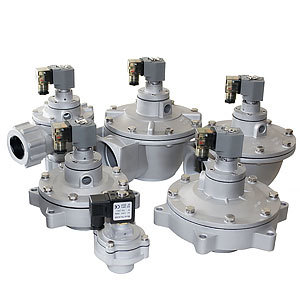
After handling the exception, it is necessary to optimize the operation and maintenance strategy from the source: if the filter bag is worn due to the presence of hard particles in the dust, a pre-treatment device can be added at the inlet of the dust collector to separate coarse particles in advance; If the filter bag is blocked due to a malfunction in the dust cleaning system, it is necessary to regularly check the pulse valve and spray pipe to ensure that the dust cleaning pressure and frequency match the working conditions of the filter bag; If aging and corrosion occur due to improper selection of filter media, it is necessary to re evaluate the dust characteristics and replace the appropriate filter media.
Practical reference: The service life of filter bags is directly related to the frequency of operation and maintenance. It is recommended to establish a "filter bag operation and maintenance ledger" to record the status, replacement quantity, abnormal reasons, and handling measures of each inspection of filter bags. Through data accumulation, optimize the inspection cycle and operation and maintenance strategy. Normally, the service life of filter bags is 1-2 years under normal working conditions, but it needs to be shortened to 6-12 months under special working conditions. Regular replacement is more effective in reducing overall costs than replacement after failure.
In the daily operation and maintenance of bag filters, the inspection of filter bag status is not an "additional item", but a core link to ensure the stable operation of the equipment. Through comprehensive dimensional inspection, adaptive practical methods, and scientific anomaly handling, the service life of filter bags can be extended while ensuring stable dust removal efficiency, ultimately achieving a balance between equipment operation and maintenance costs and environmental benefits. For various production workshops in foreign trade scenarios, standardized filter bag operation and maintenance processes are an important support for ensuring production continuity and compliance with local environmental standards.
Hot Tags:
PREVIOUS:


Contact Us
Tel:
WeChat:
WhatsApp:
E-mail:
Address:
338 National Road South, Longfengdian Village, Botou City, Hebei Province, China
JiuznTomine is expertly delivering technically complicated projects in markets & provides custom solutions for their customized need.


CONTACT INFO
Tel: +86 18531710311
WeChat: +86-18531710311
338 National Road South, Longfengdian Village, Botou City, Hebei Province, China