


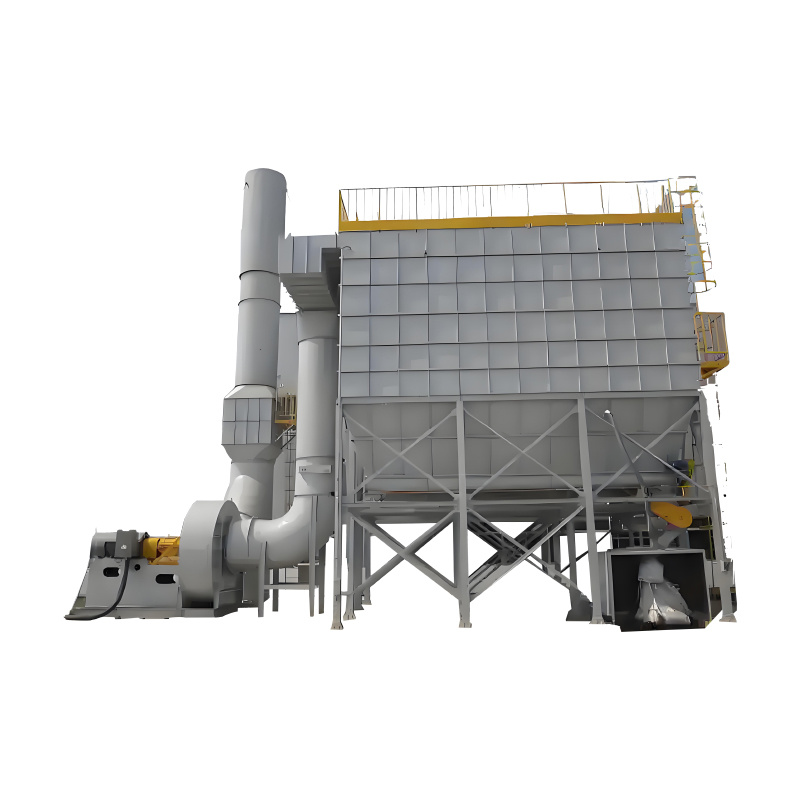
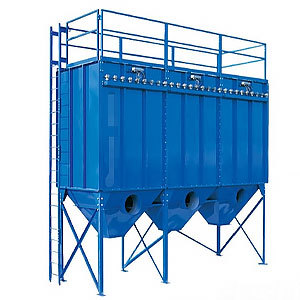
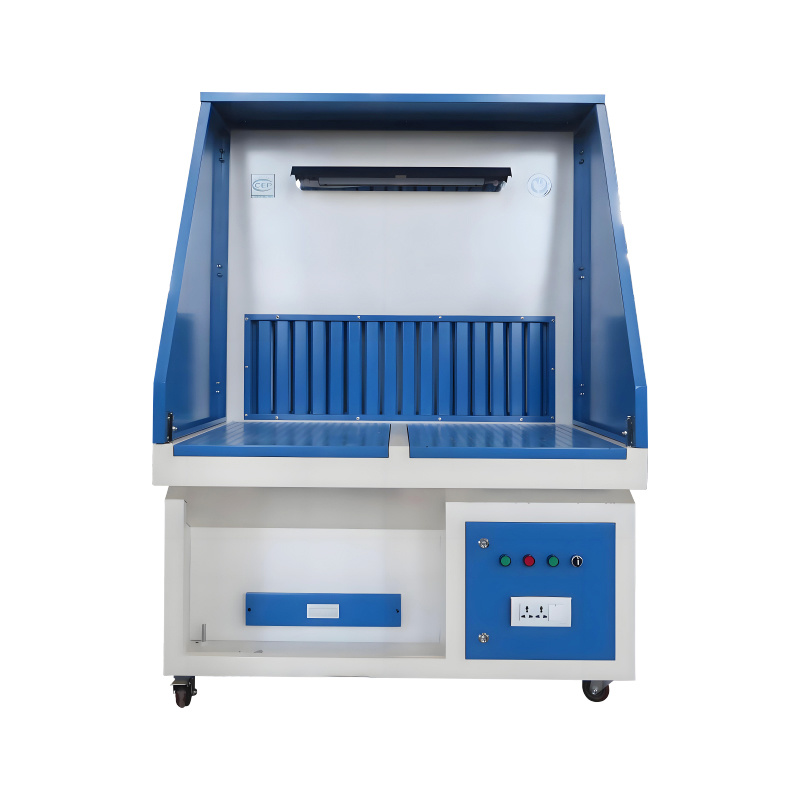
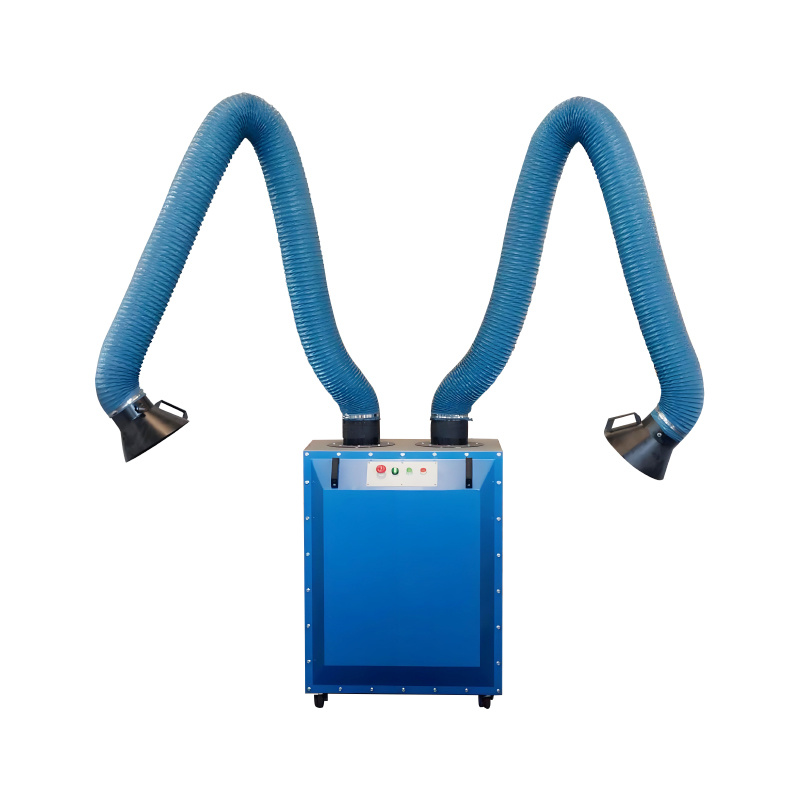










Before installing an industrial dust collector, these preparations determine the operational effectiveness
Dec 08,2025

The installation quality of industrial dust collectors directly affects their filtration efficiency, operational stability, and service life, and the preparation work before installation is the "first line of defense" to avoid subsequent failures. Especially for overseas factories, there are significant differences in site conditions, industrial standards, and climate characteristics in different regions. If the early preparation is ignored, it may lead to equipment mismatch with working conditions, insufficient compliance, and even installation rework.
1、 Preliminary research: precise matching of working conditions and site
The core of pre installation research is to 'adapt the device to the scene', rather than 'adapt the scene to the device'. Data needs to be collected from three aspects: dust characteristics, site conditions, and operational requirements to provide a basis for installation plans.
1. Dust characteristics: Clarify the core filtration requirements
The filtration accuracy, cleaning method, and filter material selection of the dust collector must be determined based on the characteristics of the dust. Before installation, three basic tests must be completed to avoid equipment failure caused by parameter deviations:
1. Physical and chemical analysis of dust: Entrust a third-party organization to test the particle size distribution, moisture content, temperature, and corrosiveness of dust.
2. Dust concentration calculation: By calculating the inlet dust concentration based on production process parameters, the redundant processing air volume of the dust collector can be determined. It is recommended to reserve 10% -20% of the air volume space to cope with fluctuations in production load.
3. Collection point confirmation: Mark the specific points where dust is generated, measure the distance between each point and the installation position of the dust collector, plan the direction of the air duct, and avoid excessive resistance caused by long air ducts.
2. Site measurement: Avoiding installation space risks
The structure of overseas factories varies greatly, and precise measurement of site data is required to ensure the safety of equipment installation and operation
1. Basic dimensions and load-bearing capacity: Measure the ground dimensions and floor height of the dust collector installation area, with a focus on confirming the ground load-bearing capacity - the load-bearing capacity of small filter cartridge dust collectors should be ≥ 5kN/m ², and that of large bag filters should be ≥ 10kN/m ². If the load-bearing capacity is insufficient, concrete foundations should be poured in advance.
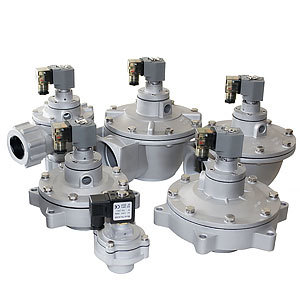
2. Space reservation requirements: A maintenance space of ≥ 1.5m should be reserved on both sides of the equipment, and if there are components such as pulse valves on the top, an operating space of ≥ 0.8m should be reserved; If outdoor installation is used, it is necessary to confirm the drainage slope of the site to avoid rainwater accumulation.
3. Pipeline and obstacle investigation: Mark obstacles such as cables, water pipes, ventilation ducts, etc. in the installation area, confirm whether the connection height between the inlet and outlet of the dust collector and the air ducts and fans matches, and avoid pipeline crossing conflicts.
3. Regulatory Compliance: Adapt to Regional Standards
Overseas markets have strict regulatory requirements for industrial environmental protection equipment, and local standards must be clearly defined before installation to avoid compliance risks
1. Emission and energy consumption standards: For example, the European Union needs to comply with the EN 15237 standard for CE certification, the United States needs to meet the EPA's particulate matter emission limits, and some Southeast Asian countries need to refer to the ISO 12103 standard; At the same time, confirm the local requirements for equipment energy consumption and select matching fans that meet the energy efficiency level.
2. Safety and electrical regulations: Europe needs to comply with the IEC 60204 electrical safety standard, North America needs to comply with the NEC electrical regulations, explosion-proof conditions require the use of Ex d IIB T4 explosion-proof dust collectors, and the installation area needs to reserve a grounding device position.
3. Environmental approval documents: Submit the technical parameters and emission report of the dust collector to the local environmental protection department in advance, obtain the installation permit document, and avoid delays in the construction period due to delayed approval.
2、 On site preparation: Strengthen the installation foundation conditions
On site preparation should revolve around the feasibility of equipment installation, completing basic construction, pipeline reservation, safety protection, and other work to prepare for equipment entry.
1. Basic construction: Ensure equipment stability
According to the weight and size of the dust collector, complete the foundation construction: ① The concrete foundation needs to reserve holes according to the position of the equipment anchor bolts, and the surface flatness error of the foundation should be ≤ 2mm/m; ② The foundation for outdoor installation needs to be equipped with a moisture-proof layer, and anti freezing treatment is required in cold northern regions; ③ Drainage ditches should be set up around the foundation to avoid rainwater soaking and affecting the load-bearing capacity.
2. Pipeline reservation: achieve seamless installation connection
Complete the reservation of air ducts, electrical, compressed air and other pipelines in advance to reduce the installation time after the equipment enters the site:
1. Air duct reservation: Install air duct brackets according to the design direction, with a spacing of ≤ 2m between brackets, and add fixed brackets at bends; The size of the air duct interface should match the inlet and outlet of the dust collector, and flange connection space should be reserved.
3. Electrical reservation: Reserve power interfaces at the equipment control cabinet position, with cable cross-sections that meet the total power requirements of components such as fans and pulse valves, and reserve grounding terminals.
2. Reserve auxiliary pipelines: If the dust collector requires compressed air cleaning, a compressed air interface should be reserved near the equipment, with a pipeline diameter of ≥ DN25; If there is a need for sewage and ash discharge, corresponding installation space for sewage pipes and ash discharge valves should be reserved.
3. Safety protection: Establish a compliant working environment
The installation site must comply with local safety regulations and protective facilities must be set up in advance: ① Scaffolding must be erected for high-altitude installation, with a guardrail height of ≥ 1.2m; ② Warning signs should be set up in the installation area, and equipment stacking areas and personnel passages should be divided; ③ Equip with fire-fighting equipment, especially during welding and other hot work operations, and clean up the surrounding flammable materials.
3、 Personnel and Tools: Ensuring Installation Professionalism
The installation of industrial dust collectors involves multiple stages such as mechanical assembly, electrical wiring, and sealing testing. It is necessary to equip professional personnel and appropriate tools in advance to avoid equipment damage caused by improper operation.
1. Personnel configuration: Clarify qualifications and division of labor
1. Core installation team: equipped with mechanical engineers, electrical engineers, and welders, team members need to be familiar with the equipment installation manual.
2. Safety supervision personnel: Designate a dedicated person to be responsible for on-site safety management, inspecting protective facilities and operating standards, especially on overseas construction sites, to ensure that personnel understand local safety warning language.
3. Docking personnel: Arrange personnel familiar with the factory's working conditions to coordinate with the installation team and promptly resolve any unexpected issues with the site, pipelines, etc.
2. Tools and spare parts: early adaptation and reserve
According to the installation process, prepare suitable tools and emergency spare parts to avoid delays in the construction period due to missing tools:
1. Basic tools: torque wrench, level, tape measure, sealant gun, welding machine; Electrical tools must comply with local voltage standards, such as 230V insulated tools used in Europe.
2. Testing tools: differential pressure gauge, airtightness tester, multimeter.
3. Emergency spare parts: Reserve sealing gaskets, bolts, nuts, and filter materials in advance, and the specifications of the spare parts should be consistent with the equipment model.
4、 Equipment pre inspection: Avoid transportation damage that may affect installation
The dust collector needs to undergo long-distance transportation from the factory to the overseas installation site. Pre inspection of the equipment before installation is crucial to promptly detect and handle transportation damage
1. Appearance inspection: Check whether the shell, filter cartridge, fan and other components are deformed or bumped, and whether the paint coating is intact. If there is any damage, communicate with the manufacturer in a timely manner.
2. Component inventory: Check the anchor bolts, pulse valves, gaskets and other accessories against the packing list to confirm that the quantity and specifications are correct and avoid missing key components.
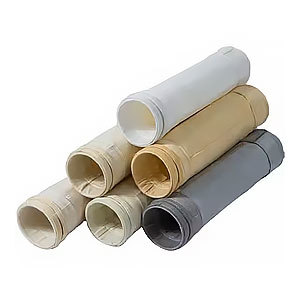
3. Internal inspection: Open the equipment access door and check if the filter cartridge is securely fixed, if there are any debris inside, and if the wiring inside the electrical box is loose.
5、 Conclusion: Prepare more in the early stage and have less trouble in the later stage
The preparation before installation of industrial dust collectors is essentially a process of "risk prediction and process optimization". For overseas factories, sufficient preliminary research can avoid equipment being disconnected from local working conditions and regulations, meticulous on-site preparation can shorten installation cycles, and professional personnel and tool configuration can ensure installation quality. These preparations not only enable the dust collector to quickly and stably operate, but also extend the service life of the equipment and reduce subsequent maintenance costs.
The more thorough the preparation before installation, the fewer potential hazards during subsequent operation. It is recommended that enterprises develop a detailed preparation list based on their own production scenarios and local standards, and if necessary, invite equipment manufacturers to provide preliminary technical support to ensure efficient and compliant installation work.
Hot Tags:


Contact Us
Tel:
WeChat:
WhatsApp:
E-mail:
Address:
338 National Road South, Longfengdian Village, Botou City, Hebei Province, China
JiuznTomine is expertly delivering technically complicated projects in markets & provides custom solutions for their customized need.


CONTACT INFO
Tel: +86 18531710311
WeChat: +86-18531710311
338 National Road South, Longfengdian Village, Botou City, Hebei Province, China