












The whole process of dust removal skeleton production: quality control points from raw materials to finished products
Dec 03,2025

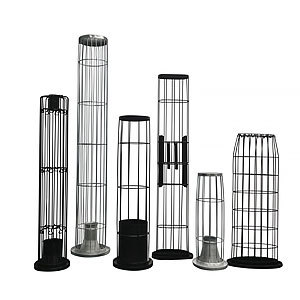
As the core supporting component of the bag filter, the quality of the dust removal skeleton directly determines the service life of the filter bag, the stability of equipment operation, and the filtration efficiency. For foreign trade scenarios, overseas customers not only focus on the mechanical properties of the skeleton, but also have strict requirements for its corrosion resistance, dimensional accuracy, and compliance. If EU industrial equipment needs to comply with the CE Machinery Directive, the chemical industry requires compliance with ATEX explosion-proof standards. The production of dust removal skeleton may seem simple, but in reality, a strict quality control system needs to be established in every link such as raw material selection, process processing, and surface treatment to adapt to the working conditions of different countries.
1、 Raw material selection: the "source line of defense" for quality control
The main raw materials for the dust removal skeleton are steel and auxiliary accessories. Deviations in the material and specifications of the raw materials can directly cause deformation, corrosion, or fracture of the skeleton. This step requires the establishment of a "double inspection" mechanism, which not only controls the material composition but also verifies the physical specifications.
1. Core steel: Match materials according to working conditions to prevent mixing and misuse of materials
The requirements for steel vary greatly among different overseas working conditions, and it is necessary to first clarify the needs before selecting materials accurately, while avoiding inferior raw materials through testing.
Material matching principle: Q235 low carbon steel can be selected for room temperature drying conditions, with controllable cost and sufficient strength; High temperature conditions require the use of 304 stainless steel to avoid oxidation and corrosion at high temperatures; 316L stainless steel must be selected for corrosive working conditions such as chemical and electroplating, as its molybdenum content enhances its resistance to pitting corrosion and is suitable for high humidity corrosive environments in Southeast Asia, Europe, and America.
Key points for raw material testing: Before each batch of steel is stored, the material composition needs to be tested by a spectral analyzer to ensure that the content of elements such as chromium, nickel, and molybdenum meets the standards; At the same time, measure the diameter of the steel wire with a micrometer, and the deviation should be controlled within ± 0.05mm - a diameter that is too thin will result in insufficient load-bearing capacity of the skeleton, while a diameter that is too thick will increase the difficulty of installing the filter bag.
2. Auxiliary accessories: Small components are related to overall stability
Although the connecting ring, Venturi tube and other accessories are small in size, they directly affect the tightness of the fit between the skeleton and the filter bag, and require synchronous quality control. Priority should be given to using steel with the same material as the main skeleton for the connecting ring to avoid electrochemical corrosion caused by contact between dissimilar metals; The Venturi tube should be made of wear-resistant nylon or stainless steel material, with a smooth and burr free inner wall to prevent scratching the filter bag during installation.
2、 Forming processing: precise control of size and structural strength
Forming processing is the core process of transforming raw materials into skeleton prototypes, covering cutting, welding, bending and other processes. Dimensional accuracy and welding strength are the key control points in this stage - overseas dust collectors have various models, and excessive deviation in skeleton dimensions can lead to installation failure. If the welding is not firm, it is easy to fall off during dust cleaning vibration.
1. Steel wire cutting: length error controlled at millimeter level
Using a fully automatic CNC cutting machine instead of manual cutting, the length error is controlled within ± 1mm. The cut steel wire needs to undergo end face treatment to remove burrs and sharp edges, in order to avoid scratching operators or filter bags during assembly. For customized skeletons exported to Europe, first piece trial cutting must be carried out based on the CAD drawings provided by the customer, and mass production can only be carried out after passing the inspection with a coordinate measuring instrument.
2. Welding process: Eliminate virtual welding and leakage welding to ensure load-bearing performance
Welding is the key process to determine the strength of the skeleton structure. It is necessary to select the appropriate welding method according to the type of steel, and establish the full process control of "pre welding commissioning, monitoring during welding, and post welding inspection".
Welding method selection: Q235 steel is welded using carbon dioxide gas shielded welding, which has high welding efficiency and smooth weld seams; Stainless steel material should be selected with argon arc welding to avoid alloy element burnout caused by high temperature and reduce corrosion resistance.
Welding quality inspection: After each skeleton is welded, it is necessary to visually inspect whether the weld seam is full, free of pores, and slag inclusions; Simultaneously conducting a tensile test, applying a tensile force of 500N after fixing the skeleton, and confirming that there is no cracking in the weld seam and no deformation in the steel wire is qualified - this test can effectively avoid virtual welding problems and is suitable for high-frequency dust cleaning vibration environments in North American and European factories.
3. Skeleton forming: Ensure verticality and roundness
Using a CNC welding forming machine for skeleton welding, ensuring that the longitudinal and transverse bars intersect vertically and the spacing between the transverse bars is uniform. The formed skeleton should be placed on a dedicated testing platform and measured for verticality with a ruler, with an error of ≤ 1 ‰; Measure the roundness with a caliper, with a deviation of ≤ 3mm, to avoid uneven local stress on the filter bag caused by skeleton deformation and shorten the service life of the filter bag.
3、 Surface treatment: Improve corrosion resistance and adapt to complex working conditions
Overseas working conditions often have problems such as high temperature, high humidity, and corrosion. Surface treatment can form a protective layer on the skeleton surface, which is the key to extending the service life. The common surface treatment methods include galvanizing, organic silicon spraying, and epoxy resin spraying, which need to be selected according to the working conditions and the treatment quality should be strictly controlled.
1. Pre treatment: Remove oil and rust to ensure coating adhesion
Before surface treatment, the skeleton needs to undergo a three-step treatment of "degreasing pickling phosphating": first, use alkaline degreaser to remove residual oil stains from welding, then use dilute hydrochloric acid pickling to remove surface rust, and finally form a rough phosphating film through phosphating to enhance the adhesion between the coating and the steel. The surface of the processed skeleton should be free of oil stains, rust, and dust. After wiping with a white cloth, there should be no obvious stains on the white cloth.
2. Coating construction: Double standards for thickness and uniformity
Galvanizing treatment: divided into hot-dip galvanizing and electroplating galvanizing. The hot-dip galvanizing coating has a thickness of ≥ 60 μ m, stronger corrosion resistance, and is suitable for outdoor dust collectors; Galvanized coating thickness ≥ 15 μ m, suitable for indoor ambient temperature conditions. After galvanizing, it is necessary to check whether the coating is uniform, without missing plating or peeling. The adhesion should be tested using the scratch method, and if the coating does not peel off, it is considered qualified.
Organic silicon spraying: The preferred treatment method for high temperature conditions, the coating thickness should be controlled at 30-50 μ m, and the continuous temperature resistance can reach 200 ℃. The spraying adopts electrostatic spraying technology to ensure that the coating is uniform and free of sagging; After curing, high temperature testing is required, and the coating is qualified if there is no discoloration or cracking. It is suitable for high temperature scenarios such as power plants and cement plants.
Epoxy resin spraying: specifically designed for strong corrosion conditions, with a coating thickness of ≥ 80 μ m and excellent acid and alkali resistance. Salt spray testing is required after spraying, and the coating is qualified if there is no rust or blistering, meeting the corrosion requirements of overseas factories such as chemical and electroplating.
4、 Finished product inspection: comprehensive investigation to ensure compliance with factory regulations
Finished product inspection is the last line of defense for quality control, which needs to cover all dimensional indicators such as size, strength, and corrosion resistance. At the same time, compliance testing should be completed for foreign trade needs to ensure that the product meets the requirements of overseas customers.
1. Full size review
According to the customer's drawing requirements, use tools such as tape measures, calipers, and coordinate measuring instruments to comprehensively measure the length, diameter, spacing between horizontal bars, and interface dimensions of the skeleton. Randomly select 5% of the products from each batch for full inspection, and if the failure rate exceeds 1%, the entire batch will be reworked.
2. Mechanical performance sampling inspection
Extract 3 skeletons from each batch for mechanical testing: firstly, compressive testing, applying pressure at both ends of the skeleton, with a deformation of ≤ 2mm considered qualified; The second is vibration testing, which simulates the vibration frequency during dust cleaning for 1 hour. If the skeleton is not loose and the welds are not cracked, it is qualified to ensure that it is compatible with the high-frequency dust cleaning system of overseas dust collectors.
3. Compliance testing for foreign trade
For overseas demand, corresponding compliance testing needs to be completed and reports provided: products exported to the European Union must pass CE Machinery Directive certification to test mechanical safety; The skeleton used for explosion-proof conditions must be ATEX certified to ensure that there is no static electricity accumulation on the surface; The skeleton used in the food industry needs to pass FDA certification, and the surface coating should have no harmful substance migration.
5、 Special considerations for foreign trade scenarios: Details determine delivery quality
The quality control of foreign trade orders is not limited to the products themselves, but also requires attention to details such as packaging and labeling to avoid transportation and customs clearance issues.
Rust proof packaging: Wrap the skeleton surface with rust proof paper, then pack it into corrugated cardboard boxes, and place desiccants inside the boxes to prevent moisture and rust during transportation; For stainless steel skeleton, it needs to be wrapped separately with plastic film to prevent electrochemical corrosion caused by contact with other metals.
Clear identification: Each cardboard box is labeled with the product model, material, quantity, batch number, and "moisture-proof" and "handle with care" labels, along with an English material report and testing certificate for ease of customs clearance and acceptance by overseas customers.
Customized adaptation: Adjust the skeleton interface structure according to the installation method of overseas dust collectors - such as commonly used flange connections in Europe, ensuring that the flange aperture matches the customer's equipment accurately; Some factories in North America use quick snap connections, and it is necessary to optimize the elasticity and strength of the snap fasteners to avoid installation difficulties.
The quality control of dust removal skeleton is a systematic engineering that runs through the entire production process. From precise selection of raw materials to compliance testing of finished products, subtle deviations in each link may affect the user experience of overseas customers. For foreign trade enterprises, stable quality is not only the foundation for meeting customer needs, but also the core for establishing brand reputation - only by establishing a strict quality control system can the dust removal skeleton operate stably in complex working conditions in different countries, providing reliable support for environmental protection production of overseas customers.
Hot Tags:


Contact Us
Tel:
WeChat:
WhatsApp:
E-mail:
Address:
338 National Road South, Longfengdian Village, Botou City, Hebei Province, China
JiuznTomine is expertly delivering technically complicated projects in markets & provides custom solutions for their customized need.


CONTACT INFO
Tel: +86 18531710311
WeChat: +86-18531710311
338 National Road South, Longfengdian Village, Botou City, Hebei Province, China