












Choosing the right material for dust removal bags can extend their lifespan by half: adaptability to working conditions is key
Nov 28,2025
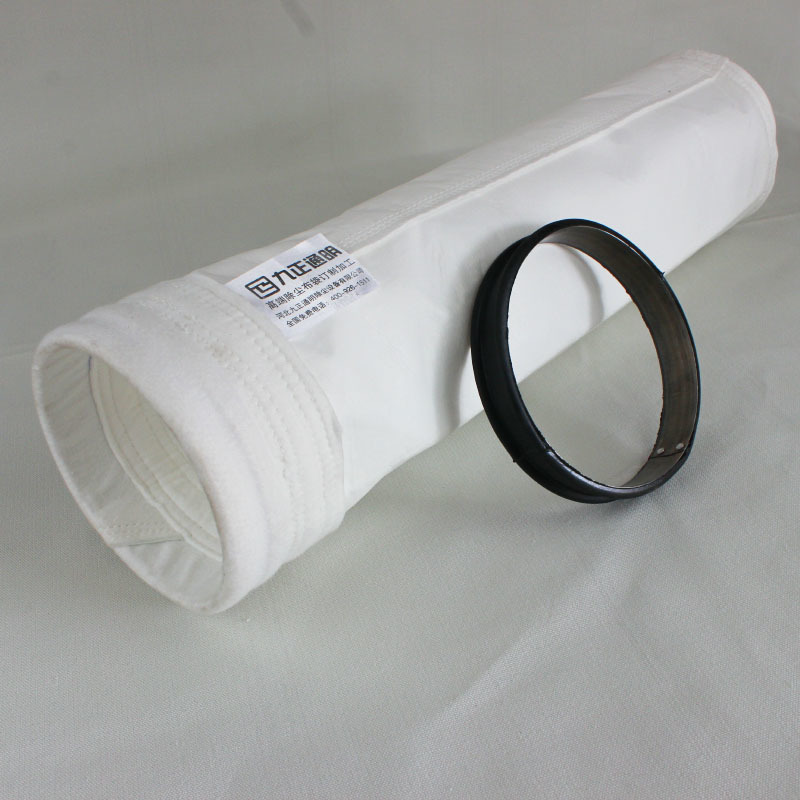
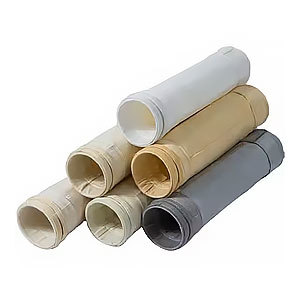
In the dust removal system of overseas industrial factories, the dust bag is the core filtering component, and its replacement frequency directly affects the operation and maintenance costs and production continuity. Many factories have reported that under the same working conditions, some dust removal bags can last for 8 months, while others are scrapped due to damage or blockage in only 4 months - the core difference lies in whether the material selection matches the working conditions. For dust removal bags, "choosing the right material" is not a simple quality upgrade, but rather a goal of extending their lifespan by more than 50% by accurately adapting to the characteristics of dust and operating environment, reducing the risk of failure such as wear and corrosion from the source.
1、 First of all, let's clarify the core logic that material determines lifespan
The lifespan of dust removal bags is determined by the balance between the "filter material tolerance" and the "working condition erosion intensity". When the high temperature resistance, corrosion resistance, wear resistance and other characteristics of the material just cover the requirements of the working conditions, the filter material can stably exert its filtering effect and avoid premature failure; If the material characteristics are misaligned with the working conditions, even if expensive filter materials are selected, they may quickly damage due to the "short board effect". The impact of material selection on lifespan is mainly reflected in three dimensions:
Corrosion resistance: High temperature flue gas can soften ordinary filter materials, acidic dust can corrode fiber structures, and high hardness dust can wear down the surface of filter materials. Suitable materials can form effective protection.
Filter stability: Filter materials that are compatible with the material are less prone to dust adhesion, clogged filter holes, and other issues. The cleaning pressure is lower, reducing fatigue damage caused by repeated stretching of the filter material.
Environmental adaptability: Moisture resistant materials are required for high humidity environments in Southeast Asia, heat-resistant materials are required for high temperature environments in the Middle East, and compliant materials are required for food factories in Europe and America. Adaptability directly determines the durability of filter materials in special environments.
Data shows that in chemical corrosion conditions, selecting the right PTFE material can extend the lifespan of the bag from 3 months to 9 months, which is 200% longer than misusing polyester material; In high-temperature conditions of power plants, the lifespan of PPS material is extended from 6 months to 10 months, which is 67% longer than that of ordinary fiberglass bags.
2、 Full analysis of mainstream materials: adapting to working conditions can extend lifespan
The mainstream materials of dust removal bags have clear "capability boundaries", and there is no "universal material". They need to be accurately matched based on dust temperature, composition, humidity, and industry requirements. The following are the four most commonly used materials and adaptation scenarios in overseas factories:
1. Polyester (PET): the cost-effective choice for room temperature drying conditions
Polyester material has become the preferred choice for ambient temperature conditions due to its low cost and good processability, but its heat and corrosion resistance are limited and only suitable for mild environments.
Core features: Temperature resistance up to 130 ℃, resistance to weak acids and bases, high fracture strength, smooth surface and easy to clean dust, priced at only one-third of PTFE material.
Adaptation conditions: Dry dust at room temperature, such as furniture factory sawdust, electronic factory welding smoke, food factory flour, feed factory pellet materials, etc. Typical application areas are Southeast Asian room temperature workshops and African agricultural product processing plants.
Upgrade plan: For high humidity scenarios, waterproof coated polyester bags can be used, which reduce dust adhesion through PTFE coating and extend the lifespan by 40% compared to ordinary polyester bags; For slightly worn scenarios, polyester filter materials with higher needle density can be selected.
Usage taboos: It is strictly prohibited to use it in temperature>130 ℃, strong acidity and alkalinity, and high humidity bonding dust scenes, otherwise hydrolysis, corrosion and damage may occur.
2. Polyphenylene sulfide (PPS): the "durable benchmark" for high temperature conditions
PPS material is the core choice for high temperature and sulfur-containing conditions, and is widely used in power plants, steel plants, and other scenarios. Its heat resistance and corrosion resistance are balanced, which is the key to extending its service life.
Core features: Temperature resistance up to 190 ℃ (instantaneous 210 ℃), excellent resistance to sulfur-containing flue gas corrosion, high oxygen resistance index, non flammability, and a lifespan typically 2-3 times that of polyester materials.
Suitable operating conditions: boiler flue gas from power plants, sintering machine dust from steel plants, and low-temperature flue gas from garbage incinerators, typically used in European power plants and Middle Eastern steel plants.
Usage limitations: Not resistant to strong oxidizing media, prone to oxidation embrittlement in working conditions with oxygen content>15% and temperature>160 ℃; Not recommended for use in high humidity environments, otherwise moisture absorption deformation may occur.
Operation and maintenance cooperation: In order to extend the service life, it is necessary to control the cleaning pressure at 0.4-0.5MPa to avoid fiber damage caused by excessive cleaning; Regularly check whether there is "powder" on the filter bag surface, and timely adjust the ash removal frequency.
3. Polytetrafluoroethylene (PTFE): The "Ultimate Protection" for Strong Corrosion Conditions
PTFE (polytetrafluoroethylene) material is known as the "plastic king" and has ultimate corrosion resistance and temperature resistance. It is an irreplaceable choice for strong corrosion scenarios such as chemical and pharmaceutical industries. Although it has a high cost, its lifespan advantage is significant.
Core features: Temperature resistance up to 260 ℃ (instantaneous 280 ℃), able to withstand almost all corrosive media such as strong acids, strong alkalis, organic solvents, etc., surface non sticky dust, stable dust removal resistance, and a lifespan of up to 12-18 months.
Suitable operating conditions: chemical chlorine and fluorine containing dust, corrosive materials in pharmaceutical factories, acid mist dust in electroplating workshops, and high-temperature flue gas from garbage incinerators. Typical applications include chemical parks in North America and pharmaceutical factories in Europe.
Cost balancing technique: Pure PTFE bags are more expensive, and a composite filter material of "PTFE film+PPS base cloth" can be used, which retains the anti-corrosion and anti sticking properties of PTFE while reducing costs, and extends the lifespan by 50% compared to pure PPS bags.
Installation precautions: PTFE material has high hardness, so avoid scratching the filter bag with sharp tools during installation; The gap between the filter bag and the skeleton should be controlled at 5-8mm to prevent friction damage during operation.
4. Fiberglass (GF): a "specialized material" for ultra-high temperature conditions
Fiberglass material is known for its excellent high-temperature resistance, but its brittleness and poor wear resistance require precise use in specific ultra-high temperature scenarios.
Core features: Temperature resistance up to 300 ℃ (instantaneous 350 ℃), good chemical stability, non combustible and non explosive, suitable for ultra-high temperature inert dust scenarios.
Suitable operating conditions: high temperature flue gas (250-300 ℃) at the tail of cement kilns, dust from roasting furnaces in metallurgical plants, and flue gas from ceramic kilns. Typical applications include cement plants in the Middle East and metallurgical plants in Africa.
Defect compensation: To improve wear resistance, it is necessary to impregnate fiberglass filter materials with silane or graphite; Due to its high brittleness, the cleaning frequency needs to be reduced, and the cleaning pressure should be controlled at 0.3-0.4 MPa to avoid fiber breakage caused by repeated vibration.
3、 The cost of choosing the wrong material: shortened lifespan is only the 'minimum loss'
Due to the incorrect selection of dust bag materials in overseas factories, not only can filter bags be frequently replaced, but it may also lead to chain problems such as downtime losses and environmental fines. The following are risk points summarized from real cases:
Sudden reduction in lifespan and sharp increase in operation and maintenance costs: A rubber factory in Southeast Asia used ordinary polyester bags to treat rubber dust at 140 ℃. Due to the temperature exceeding the material's tolerance limit, the bags softened and damaged in just 2 months, with a monthly replacement cost exceeding $8000; After replacing with PPS bags that can withstand temperatures up to 190 ℃, the lifespan was extended to 6 months, and the monthly average cost was reduced to $2700.
Filter failure triggers environmental fines: A chemical company in Europe mistakenly used PPS bags to treat chlorine containing dust. After 3 months, the filter bags corroded and damaged, and the emission concentration exceeded the standard, resulting in a fine of 50000 euros by the local environmental protection department; After replacing with PTFE bags, the emissions remained stable and met the standards, and the lifespan was extended to 15 months.
Equipment damage leading to shutdown: A power plant in the Middle East used fiberglass bags to treat sulfur-containing flue gas. Due to the lack of impregnation treatment, fiber debris generated by the wear of the filter bags entered the fan, causing blockage of the fan impeller. The shutdown and maintenance took 3 days, resulting in a loss of over 200000 US dollars in output value; After switching to impregnated fiberglass bags, the lifespan was extended from 3 months to 8 months without any further equipment malfunctions.
Non compliant material affects audit acceptance: A food factory in North America used ordinary polyester bags to handle baking dust. Due to the material not passing FDA certification, it was deducted points in the EcoVadis audit, affecting customer cooperation; After replacing with food grade PTFE coated cloth bags, the audit was successfully passed, and the lifespan of the bags was extended from 4 months to 7 months.
4、 Four step method for selecting foreign trade scenarios: precise matching without stepping on pitfalls
Based on the regional characteristics and working conditions of overseas factories, combined with compliance requirements and cost control, a set of directly applicable dust bag material selection process has been summarized:
Step 1: Complete collection of working condition parameters: Focus on recording "dust temperature, chemical composition, humidity, and abrasiveness". For example, if the dust parameters in a chemical workshop are "temperature 160 ℃, pH=3 (acidic), humidity 60%", polyester material should be excluded and PPS or PTFE should be prioritized.
Step 2: Benchmarking against local compliance standards: The food/pharmaceutical industry needs to confirm whether the materials comply with FDA and EU 10/2011 certifications; Anti static materials should be selected for explosion-proof scenarios; In areas with strict environmental protection, it is necessary to ensure that the filtration efficiency of filter materials meets the standard, in order to avoid customs clearance and production being affected by material issues.
Step 3: Calculate the full lifecycle cost: Compare the "purchase price x replacement frequency+installation cost+downtime loss" of different materials, rather than just looking at the unit price. For example, a pure PTFE bag with a unit price of $100 and a lifespan of 12 months; PPS bags have a unit price of $60 and a lifespan of 6 months. Although the former has a higher unit price, its total annual cost is lower than the latter.
Step 4: Reserve regional environmental margin: When selecting materials for high-temperature areas in the Middle East, the upper limit of temperature resistance should be at least 30 ℃ higher than the actual working conditions; Priority should be given to waterproof film materials in high humidity areas of Southeast Asia; Priority should be given to selecting materials that are easy to purchase and install in remote areas of Africa, in order to reduce the supply risk of special materials.
5、 Summary: The core of extending lifespan is "adaptation" rather than "upgrade"
The essence of material selection for dust removal bags is to ensure that the "capacity boundary" of the filter material completely covers the "erosion strength" of the working conditions. For overseas factories, there is no "best material", only the "most suitable material" - PTFE material used in food factories is a waste of resources, while polyester material used in chemical workshops is fraught with hidden dangers. The key to extending the lifespan of cloth bags lies in accurately collecting operating parameters, benchmarking compliance requirements, calculating the full lifecycle cost, and finding the optimal balance point between material and operating conditions. Choosing the right material can not only extend the lifespan of the bag by half, but also reduce operation and maintenance costs, ensure production stability, and make the dust removal system truly a "protective barrier" rather than a "burden" for industrial production.
Hot Tags:


Contact Us
Tel:
WeChat:
WhatsApp:
E-mail:
Address:
338 National Road South, Longfengdian Village, Botou City, Hebei Province, China
JiuznTomine is expertly delivering technically complicated projects in markets & provides custom solutions for their customized need.


CONTACT INFO
Tel: +86 18531710311
WeChat: +86-18531710311
338 National Road South, Longfengdian Village, Botou City, Hebei Province, China