

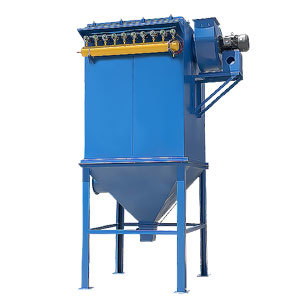
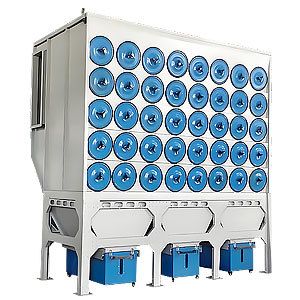
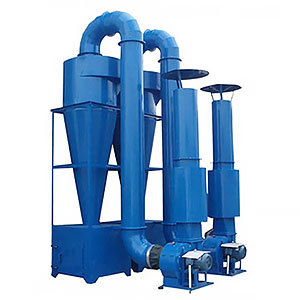

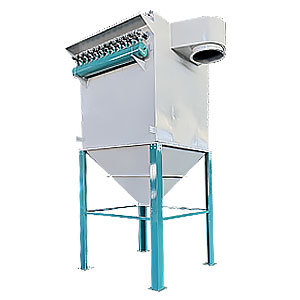
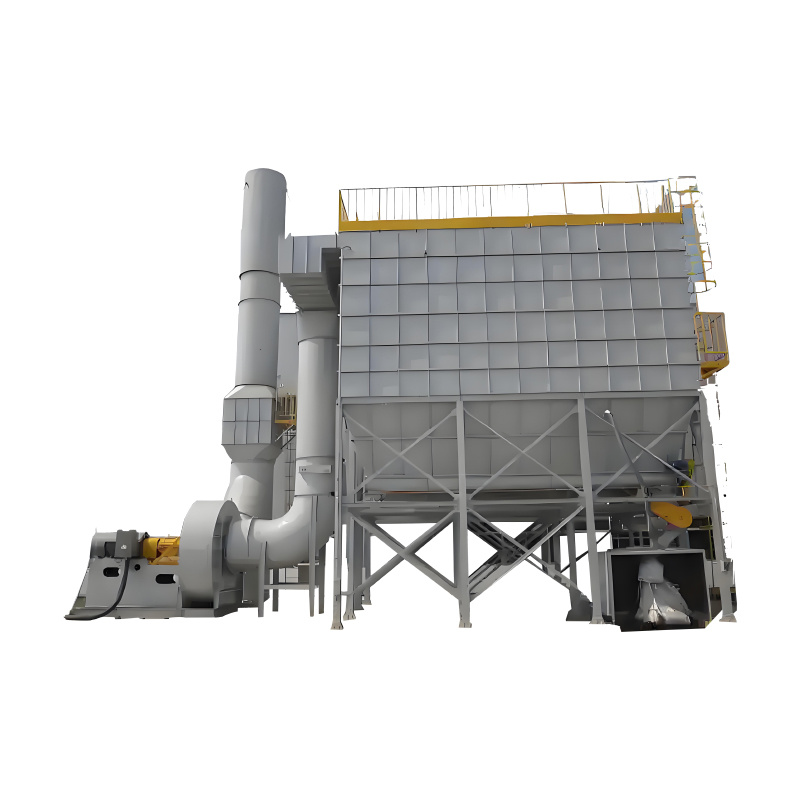
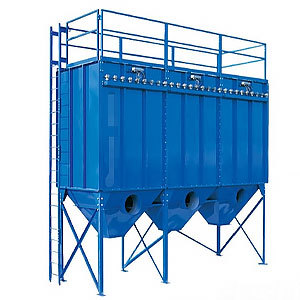
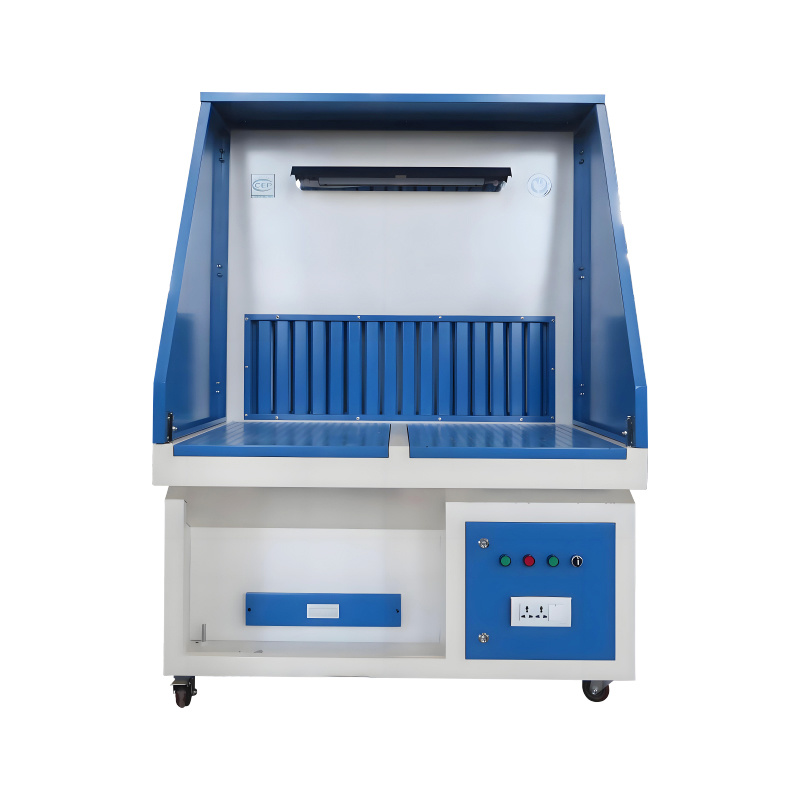
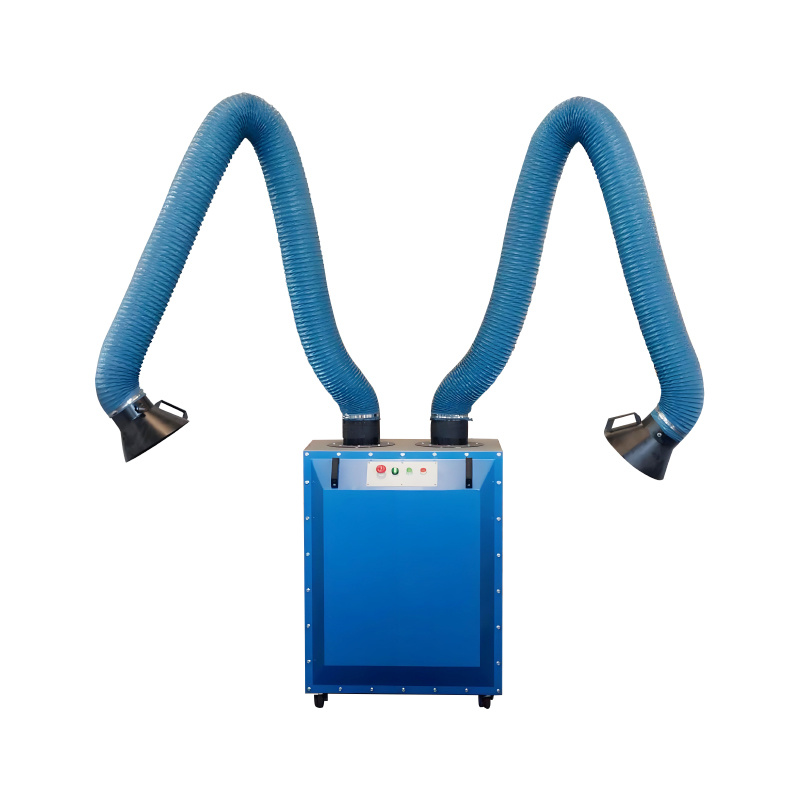










Choosing the right material for a cyclone dust collector is crucial: adapting to the working conditions is the core
Nov 28,2025

In industrial dust removal systems, cyclone dust collectors have become the preferred equipment for pre dust removal or coarse dust removal in industries such as mining, metallurgy, and chemical engineering due to their simple structure, controllable cost, and no loss of filter materials. But many overseas factories encounter this problem: the same cyclone dust collector can be used for 3 years in workshop A, but in workshop B, it shows shell wear or corrosion and air leakage after 6 months. The core reason is that the material selection did not match the specific working conditions. The material of a cyclone dust collector directly determines its service life, operational stability, and environmental compliance, especially in high temperature, high corrosion, and high abrasive dust scenarios. Choosing the right material can reduce equipment failure rates by more than 70%.
1、 First understand: Material determines more than just 'durability'
The material selection of cyclone dust collectors is not "the more expensive the better", but should match the three dimensions of "dust characteristics+operating environment+local standards". The influence of materials runs through the entire lifecycle of equipment:
Basic guarantee: Wear resistance and corrosion resistance: High hardness dust will continue to wash the inner wall of the shell, and corrosive dust will corrode the metal structure. If the material is not tolerant, problems such as thinning of the wall and air leakage will occur, directly causing the dust removal efficiency to drop from 90% to below 60%.
Safety bottom line: high temperature resistance and explosion prevention: when dealing with high-temperature flue gas from boilers, ordinary carbon steel will soften and deform; In the scenario of flammable and explosive dust in chemical industry, materials with poor conductivity are prone to accumulate static electricity, causing safety risks.
Compliance prerequisite: Compliance with local standards: European and American food processing plants must have materials that meet FDA certification to avoid dust pollution of products; The Middle East Chemical Industrial Park requires materials to pass ATEX explosion-proof certification, which needs to be considered in advance during the material selection stage.
Cost control: More cost-effective throughout the entire life cycle: In high abrasive working conditions, using ceramic lining materials may increase the initial cost by 20%, but the service life is 5 times that of ordinary carbon steel, and the comprehensive operation and maintenance costs are actually reduced by 60%.
2、 Full analysis of mainstream materials: applicable working conditions and core characteristics
At present, the mainstream materials for cyclone dust collectors can be divided into four categories, each with clear adaptation boundaries that need to be tailored to specific working conditions:
1. Ordinary carbon steel (Q235B): the cost-effective choice for basic working conditions
As the most commonly used basic material, the advantage of ordinary carbon steel lies in its low cost, good processability, and suitability for non corrosive and low abrasive working conditions at room temperature.
Applicable scenarios: grain processing, wood processing, room temperature drying dust, etc. Typical application areas include Southeast Asian room temperature workshops and African agricultural product processing plants.
Core characteristics: Tensile strength ≥ 375MPa, temperature resistance ≤ 150 ℃, no anti-corrosion and rust prevention ability, requiring basic painting treatment.
Usage limitations: It is strictly prohibited to use in acidic, alkaline, and high humidity environments. If moisture-proof treatment is not done during the rainy season in Southeast Asia, the shell is prone to rusting; Unable to withstand high hardness dust erosion, wall perforation is prone to occur in mining scenarios.
Operation and maintenance suggestion: Check the integrity of the paint surface every 3 months, and touch up the paint in a timely manner if peeling occurs; Install drainage holes at the bottom of the equipment during high humidity seasons to prevent liquid accumulation and corrosion.
2. Stainless steel (304/316L): a "safety barrier" for corrosive conditions
Stainless steel has become the preferred choice in industries such as chemical, food, and pharmaceutical due to its excellent corrosion resistance. Among them, 304 stainless steel is suitable for weak corrosion scenarios, while 316L is designed for strong corrosion conditions.
304 stainless steel is suitable for food processing, electronic factory welding fumes, pharmaceutical factory dust, and meets the requirements of FDA certification in Europe and America. It is typically used in European food parks and North American pharmaceutical workshops. Core features: Contains 8% -10% nickel, can withstand temperatures up to 600 ℃, can withstand weak acidic dust, has a smooth surface that is not prone to dust accumulation, and is easy to clean. Usage precautions: Avoid long-term exposure to high chlorine environments, otherwise pitting corrosion may occur.
316L stainless steel is suitable for acid mist treatment in chemical, coastal factories, and electroplating workshops. It is typically used in petrochemical parks in the Middle East and coastal chemical enterprises in Southeast Asia. Core features: Adding molybdenum element on the basis of 304, the corrosion resistance is increased by 3 times, it can withstand strong acidic environments, and the tensile strength is ≥ 480MPa. Cost reminder: The price is about 1.5 times that of 304 stainless steel, suitable for strong corrosion and rigid demand scenarios. Do not blindly choose unless necessary.
3. Ceramic lining/wear-resistant coating: a "durable solution" for high abrasion dust
When dealing with high abrasive dust such as mining crushed stone powder, metallurgical blast furnace slag powder, and cement raw materials, ordinary metal materials wear very quickly, and ceramic lining or wear-resistant coating becomes the key choice.
Ceramic lining (alumina ceramic) is suitable for mining crushing workshops, raw material pretreatment in cement plants, ore screening and dust removal in metallurgical plants, and is typically used in African mines and Middle Eastern cement plants. Core features: Mohs hardness ≥ 9, wear resistance 20 times that of carbon steel, temperature resistance ≤ 800 ℃, no dust adsorption problem, and a service life of up to 5-8 years. Installation points: Adopt embedded fixation to prevent ceramic tiles from falling off due to vibration; The joint should be sealed with wear-resistant adhesive to prevent dust from penetrating and eroding the substrate.
Wear resistant coating (tungsten carbide spray coating) is suitable for small and medium-sized cyclone dust collectors, equipment with irregular structures, or scenes with moderate dust abrasion properties. Core features: Coating thickness of 300-500 μ m, wear resistance 8-10 times that of carbon steel, flexible construction, adaptable to complex surfaces, and lower cost than ceramic lining. Maintenance focus: Check the integrity of the coating every six months, and promptly spray in case of local peeling to avoid rapid wear of the substrate due to exposure.
4. Heat resistant alloys (16MnR, Inconel): "Stability guarantee" for high temperature working conditions
When dealing with high-temperature dust such as boiler flue gas and incinerator exhaust gas (above 150 ℃), ordinary materials are prone to softening and deformation, and heat-resistant alloy materials should be selected.
16MnR (low-alloy heat-resistant steel) is suitable for medium temperature conditions, such as boiler flue gas pre dust removal and coking plant raw gas treatment. It is typically used in European steel plants and Southeast Asian power plants. Core features: Temperature resistance up to 450 ℃, tensile strength ≥ 510MPa, cost only 60% of stainless steel, balancing heat resistance and economy.
Inconel alloy (nickel chromium alloy) is suitable for high temperature and strong corrosion conditions, such as waste incinerator exhaust gas and chemical high-temperature reaction dust treatment. It is typically used in environmental engineering in North America and incineration plants in Japan. Core features: Temperature resistance can reach over 1000 ℃, maintaining excellent corrosion and creep resistance at high temperatures, but the price is relatively high and only used for special high-temperature scenarios.
3、 The Cost of Choosing the Wrong Material: These Risks Must Be Cautious
Many overseas factories, due to initial material selection errors, not only increase operation and maintenance costs, but may also lead to environmental fines or safety accidents. Common consequences include:
Corrosion leakage leads to environmental protection exceeding standards: A Southeast Asian chemical plant used a regular carbon steel cyclone dust collector to treat acid containing dust. Three months later, a 5mm diameter corrosion hole appeared on the shell, and the dust was directly discharged, causing complaints from surrounding residents. The local environmental protection department fined 100000 US dollars and replaced the 316L stainless steel equipment before resuming production.
Equipment chain failure caused by wear and perforation: A carbon steel dust collector was used to treat crushed stone powder in a mine in Africa. Within 2 months, the inner wall surface was worn down to 2mm, resulting in severe vibration during equipment operation and damage to fan bearings. The shutdown for maintenance took 1 week and resulted in a loss of over 500000 yuan in production value.
High temperature deformation poses a safety hazard: A power plant in the Middle East used ordinary carbon steel to treat 350 ℃ boiler flue gas. After one month, bulging deformation appeared in the cone of the dust collector. If not discovered in time, it may cause the shell to burst. After replacing the 16MnR material, the problem was completely solved.
Non compliant material affects customs clearance and audit: A European food factory imported a carbon steel cyclone dust collector. Due to the material not passing FDA certification, the equipment was unable to clear customs upon arrival at the port, resulting in a daily detention fee of over 2000 euros. It was necessary to re customize the 304 stainless steel equipment to complete compliance acceptance.
4、 Four step method for material selection in foreign trade scenarios: precise matching without stepping on pitfalls
Based on the special needs of overseas factories, combined with working condition analysis and regional characteristics, a practical material selection process has been summarized:
Step 1: Thoroughly disassemble the operating parameters: record in detail the "grindability, corrosiveness, temperature" of the dust, as well as the operating environment of the equipment. For example, in Southeast Asian rubber factories, dust is at room temperature, weakly corrosive, and has low abrasion resistance, and 304 stainless steel is the suitable choice.
Step 2: Benchmarking local compliance standards: The food industry prioritizes confirming FDA and EU 10/2011 certification requirements; Chemical explosion-proof scenarios must comply with ATEX and UL certifications; In areas with strict environmental protection, materials must be traceable and material certificates must be retained.
Step 3: Calculate the full lifecycle cost: Compare the "initial procurement cost+annual maintenance cost+expected service life" of different materials, rather than just looking at the initial price. In high abrasion conditions, ceramic lining is more cost-effective than carbon steel.
Step 4: Reserve regional adaptation margin: When selecting materials for high temperature areas in the Middle East, the upper limit of temperature resistance should be at least 50 ℃ higher than the actual working conditions; In high humidity areas of Southeast Asia, 316L is preferred over 304 stainless steel material; In remote areas of Africa, priority should be given to materials with simple structures and easy maintenance to reduce the difficulty of component replacement.
5、 Summary: The core of material selection is "adaptation" rather than "upgrading"
The material selection of cyclone dust collectors is essentially about finding a balance between "working condition requirements, compliance requirements, and cost control". For overseas factories, there is no absolute best material, only the most suitable material - using 304 stainless steel in grain processing plants is a waste of resources, and using ordinary carbon steel in chemical workshops is fraught with hidden dangers. The core logic is to first clearly define one's own working conditions and regional characteristics, then accurately match them with material characteristics, and at the same time calculate the "economic account" and "safety account" of the entire life cycle. Only by selecting the right material can a cyclone dust collector truly become the "first line of defense" for stable, durable, and compliant dust removal.
Hot Tags:


Contact Us
Tel:
WeChat:
WhatsApp:
E-mail:
Address:
338 National Road South, Longfengdian Village, Botou City, Hebei Province, China
JiuznTomine is expertly delivering technically complicated projects in markets & provides custom solutions for their customized need.


CONTACT INFO
Tel: +86 18531710311
WeChat: +86-18531710311
338 National Road South, Longfengdian Village, Botou City, Hebei Province, China