


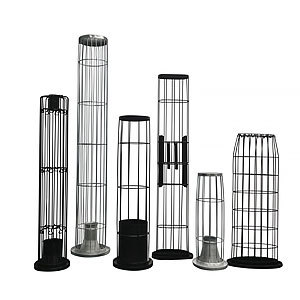
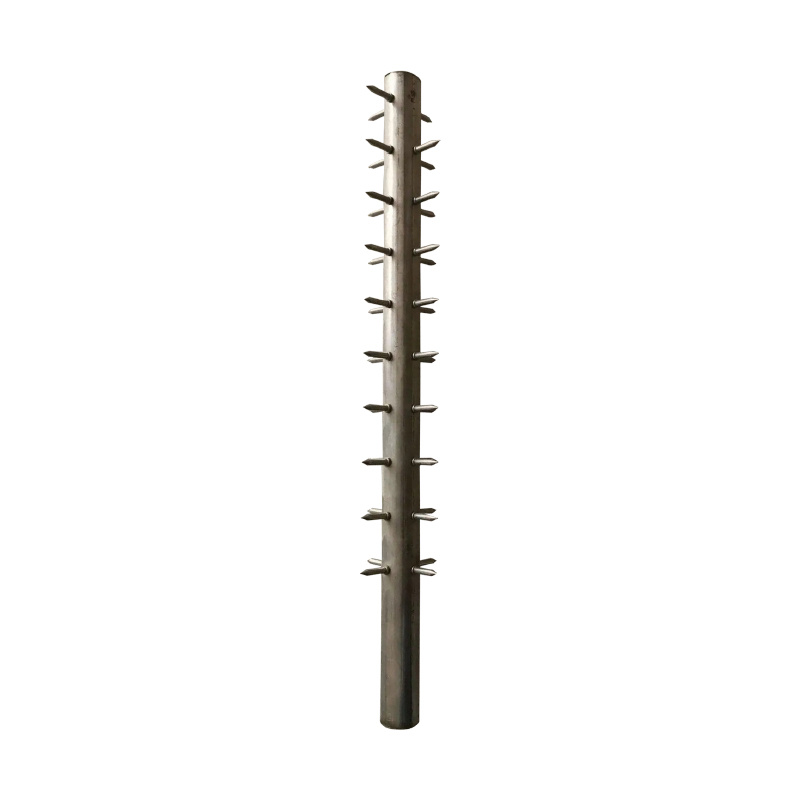









Stainless Steel Dust Removal Skeleton: Corrosive Industrial Dust Removal Durable
Sep 19,2025
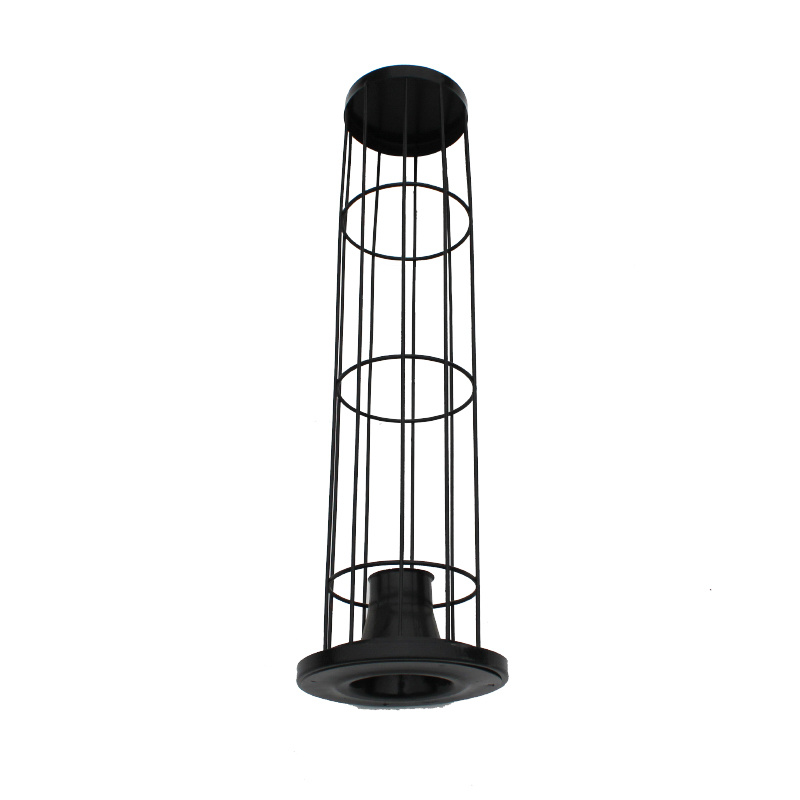
In corrosive industrial scenarios such as chemical, electroplating, pharmaceutical, and waste incineration, ordinary carbon steel dust removal skeletons often corrode due to acid, alkali, and salt components in the flue gas, and rust and deformation occur within 3-6 months. Not only does frequent abrasion of the filter bag cause dust removal failure, but it also needs to be repeatedly shut down and replaced, with an annual operation and maintenance cost of over 20000 US dollars. The stainless steel dust removal skeleton, with its characteristics of "strong corrosion resistance, high durability, and wide adaptability", has become the "durable preferred" choice for dust removal in overseas corrosive industries. It can withstand harsh working conditions and comply with compliance standards such as EU REACH and US FDA, helping enterprises reduce losses and stabilize production.
1、 Material grading: Accurately adapted to different corrosion strength working conditions
The core advantage of stainless steel dust removal skeleton lies in "material customization", where different stainless steel grades correspond to different corrosion scenarios, avoiding "excessive selection waste" or "short lifespan due to insufficient materials":
1. 304 stainless steel: a cost-effective choice for mild corrosion scenarios
Suitable for electroplating rinsing, food processing and other scenarios, containing 18% chromium and 8% nickel, it can resist weak acidic smoke erosion. After surface electrolytic polishing treatment, the smoothness reaches Ra0.8, reducing dust adhesion and corrosive medium adhesion.
2. 316L stainless steel: moderate to severe corrosion "anti-corrosion mainstay"
For strong corrosion scenarios such as chemical synthesis and pharmaceutical fermentation, 316L is added with 2% -3% molybdenum element on the basis of 304, which increases its pitting corrosion resistance by 5 times, can tolerate acidic and alkaline flue gas with pH 2-12, and can even operate stably in chloride salt spray environments.
2、 Structural optimization: Not only does it resist corrosion, but it also protects the filter bag and is durable
The durability of stainless steel skeleton not only depends on the material, but also on the detailed design to reduce the loss of filter bags, further reducing the overall cost:
1. Non burr welding+rounded corner treatment to avoid scratching the filter bag
Using CNC pulse welding technology, the welding points are smooth without welding slag, and then polished with a 240 mesh grinding wheel. All edges and corners of the skeleton are treated with R3mm rounded corners. When bagging, the filter bag fits snugly with the skeleton without friction, and there will be no "local abrasion" problem during high-frequency vibration for dust cleaning. The service life of the filter bag can be extended by 30%.
2. Anti dust structure to reduce the retention of corrosive media
For high humidity corrosion scenarios, the skeleton adopts a "variable diameter design": the top diameter is 2mm smaller than the filter bag, and a 5 ° inclined guide ring is added at the bottom, which not only avoids dust accumulation in the gap between the skeleton and the filter bag, but also guides the corrosive medium to quickly fall into the ash hopper with the dust, reducing local corrosion caused by long-term retention, especially suitable for high humidity chemical workshops in Southeast Asia.
3、 Foreign Trade Adaptation: Compliance+Customization, Global Landing Without Obstacles
The overseas corrosive industry has high requirements for equipment compliance and adaptability, and the stainless steel dust removal framework fully meets foreign trade needs from "certification" to "details":
1. Full coverage of compliance certification
The 304/316L materials have passed SGS testing and comply with EU REACH regulations and US FDA food grade standards. No additional material testing is required for exports to Europe and America, resulting in a 50% increase in customs clearance efficiency; Explosion proof scenarios can be selected with ATEX certified stainless steel frame, and the grounding resistance of the shell is ≤ 4 Ω, suitable for chemical explosion-proof workshops.
2. Customization of regional working conditions
High humidity scenario: additional passivation and PTFE coating spraying, dual anti-corrosion to prevent corrosion caused by condensation water;
Small factory scenario: Provide a "detachable stainless steel skeleton" for easy installation in narrow workshops, reducing transportation volume and costs.
For overseas corrosive industries, stainless steel dust removal skeleton is not a "simple filter bag support", but a "key component for cost reduction and efficiency improvement" - it uses materials to resist corrosion and extend its own life, optimizes the structure to protect the filter bag, and can also meet global compliance and regional working conditions, truly achieving "one-time investment, long-term worry free". In the increasingly stringent environmental requirements, choosing the right stainless steel dust removal frame is to install a "durable insurance" for the dust removal system of corrosive industries.
Hot Tags:


Contact Us
Tel:
WeChat:
WhatsApp:
E-mail:
Address:
338 National Road South, Longfengdian Village, Botou City, Hebei Province, China
JiuznTomine is expertly delivering technically complicated projects in markets & provides custom solutions for their customized need.


CONTACT INFO
Tel: +86 18531710311
WeChat: +86-18531710311
338 National Road South, Longfengdian Village, Botou City, Hebei Province, China