












How to design and process the skeleton to extend the service life of dust removal bags
Aug 11,2025

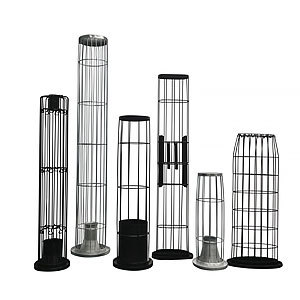
The service life of dust removal bags depends not only on the filter material itself, but also on the design and processing technology of the skeleton as a supporting structure. Scientific skeleton design can reduce bag wear and avoid excessive local stress, thereby significantly extending its replacement cycle and reducing enterprise operation and maintenance costs. For diversified working conditions in foreign trade scenarios, customized skeleton processing is the core to adapt to different types of filter bags and industry needs.
1、 Structural design: the core of reducing bag friction
The rationality of the skeleton structure directly determines the stress state of the bag:
1. Verticality control
The verticality deviation of the skeleton needs to be strictly controlled within ≤ 3mm/m, otherwise it will cause the bag to tilt after being inserted, and the local friction with the skeleton will intensify. During processing, CNC bending machines are used for precise shaping, high-strength steel is selected to reduce deformation, and after welding, a straightening machine is used for secondary correction to ensure that the bag is uniformly stressed.
2. Optimization of spacing between reinforcement bars
If the spacing between the reinforcing bars is too dense, it will increase the contact area with the cloth bag, while if it is too sparse, it will not provide sufficient support and cause the cloth bag to collapse. According to the diameter of the bag, it is recommended to design the spacing between the ribs to be 100-150mm, and adopt a spiral distribution, which can reduce local friction by 50% compared to straight ribs.
3. End structure improvement
The top of the skeleton adopts a curved transition design to avoid scratching the bag mouth with right angles or sharp edges. Install elastic support rings at the bottom and add cushioning pads at the contact area with the ash hopper to reduce the wear of the bag caused by vibration transmission during equipment operation.
2、 Surface treatment: dual guarantee of corrosion prevention and wear reduction
1. Selection of plating process
For high humidity environments, the surface of the skeleton needs to be galvanized with a zinc layer thickness of ≥ 80 μ m, and there should be no corrosion after 72 hours of salt spray testing; For corrosive working conditions, Dacromet coating is used to improve acid and alkali resistance by more than three times, avoiding rust contamination of the bag and causing filtration failure.
2. Smoothness polishing
After welding, it needs to be finely polished with 800 grit sandpaper to remove welding slag and burrs, ensuring that the surface roughness Ra is ≤ 1.6 μ m. For easily scratched filter materials such as laminated filter bags, an additional polishing process can be added to reduce the risk of bag wear during dust cleaning vibration.
3、 Dimensional accuracy: key parameter for adapting to cloth bags
1. Diameter tolerance control
The diameter of the skeleton needs to be accurately matched with the inner strength of the bag, and the recommended tolerance range is+1mm/-0mm. Too large can easily cause the bag to be stretched and deformed, while too small can result in insufficient support and cause the bag to wrinkle and accumulate dust. During processing, a laser caliper is used for real-time monitoring to ensure consistency in size for each batch.
2. Length adaptation
The length of the skeleton should be 5-10mm shorter than that of the cloth bag, with reserved space for the cloth bag to expand and retract, to avoid the cloth bag being broken by the top of the skeleton during dust cleaning. For high-temperature conditions, it is necessary to consider the thermal shrinkage characteristics of the filter material and increase the length margin appropriately.
4、 Material selection: durability foundation adapted to working conditions
1. Normal temperature condition (≤ 130 ℃)
Low carbon steel (Q235) is selected for acid pickling and phosphating treatment, which has low cost and meets the required strength, making it suitable for industries such as grain processing and wood processing.
2. Medium to high temperature conditions (130-200 ℃)
Made of 304 stainless steel material, it has excellent oxidation resistance and stable performance in the steel and casting industries, which can reduce the deformation of the skeleton caused by material aging at high temperatures.
3. Extreme working conditions (>200 ℃ or strong corrosion)
Using 316L stainless steel or nickel alloy, it can withstand smoke corrosion and high-temperature creep, adapt to harsh environments such as garbage incineration and chemical industry, and ensure that the skeleton maintains structural integrity throughout the life cycle of the bag.
5、 Key points of customization in foreign trade scenarios
According to industry standards in different countries, skeleton processing needs to be flexibly adjusted:
EU market: Compliance with REACH regulations on heavy metal content restrictions is required, and hexavalent chromium is prohibited for coatings;
North American market: Emphasize structural strength certification and provide material mechanical performance testing reports;
Southeast Asian market: Prioritize galvanizing process to enhance moisture resistance while controlling costs.
By optimizing the design and processing details of the skeleton, the average service life of the dust removal bag can be extended by 30% -50%, significantly reducing the frequency of replacement and labor costs. For foreign trade enterprises, a high-quality skeleton is not only the "protective barrier" of the bag, but also an implicit advantage in enhancing the overall competitiveness of the dust removal system, allowing the equipment to operate continuously and stably in working conditions around the world.
Hot Tags:


Contact Us
Tel:
WeChat:
WhatsApp:
E-mail:
Address:
338 National Road South, Longfengdian Village, Botou City, Hebei Province, China
JiuznTomine is expertly delivering technically complicated projects in markets & provides custom solutions for their customized need.


CONTACT INFO
Tel: +86 18531710311
WeChat: +86-18531710311
338 National Road South, Longfengdian Village, Botou City, Hebei Province, China