













Analysis of the working principle of cyclone dust collector
Jun 06,2025

In the field of industrial dust removal, cyclone dust collectors have become one of the preferred equipment for many enterprises worldwide to handle dust due to their high efficiency and economic characteristics. Having a deep understanding of its working principle can help you better evaluate equipment performance and choose an appropriate dust removal solution.
1、 Core structure: the foundation for achieving efficient dust removal
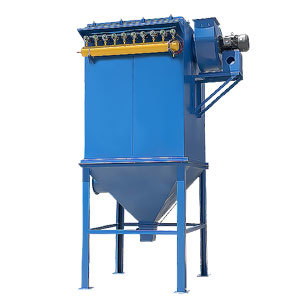
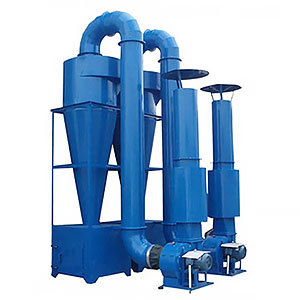
The cyclone dust collector mainly consists of five parts: air inlet, cylindrical section, conical section, exhaust pipe, and ash hopper. The dusty gas enters at high speed from the tangential inlet on the side of the equipment. The cylindrical section provides initial rotational space, while the conical section guides the airflow to gradually contract. The exhaust pipe is located at the top of the equipment to discharge the purified gas, and the ash hopper is located at the bottom of the equipment to collect and separate the dust.
2、 Workflow: Transition from dusty gas to clean air
High speed rotating separation: The dusty gas enters the dust collector along the tangential direction at a speed of 15-25m/s, forming a strong rotating airflow in the cylindrical and conical sections. Due to the much higher density of dust particles compared to gas, under the action of centrifugal force, dust is rapidly thrown towards the wall of the reactor. During this process, dust particles larger than 5 microns can quickly detach from the airflow under the action of centrifugal force.
Gravity settling and secondary separation: Dust thrown towards the wall of the device slides down along the wall to the ash hopper under the action of gravity. At the same time, during the contraction process of the conical section, some of the unseparated fine dust will be subjected to centrifugal force again, achieving secondary separation and further improving dust removal efficiency.
Purified gas discharge: After centrifugal separation and gravity settling, most of the dust is removed as clean gas, which forms an upward internal swirling airflow and is discharged from the equipment through the top exhaust pipe, completing the entire dust removal process.
3、 Advantage feature: Efficient performance driven by principles
Based on the unique centrifugal separation principle, the cyclone dust collector has the characteristics of simple structure, no moving parts, and low maintenance cost. It can achieve a separation efficiency of over 90% for large particle dust without additional energy consumption (except for gas transportation power). Especially suitable for industries such as mining, cement, and sand and gravel plants with large dust particles and high concentrations.
Hot Tags:


Contact Us
Tel:
WeChat:
WhatsApp:
E-mail:
Address:
338 National Road South, Longfengdian Village, Botou City, Hebei Province, China
JiuznTomine is expertly delivering technically complicated projects in markets & provides custom solutions for their customized need.


CONTACT INFO
Tel: +86 18531710311
WeChat: +86-18531710311
338 National Road South, Longfengdian Village, Botou City, Hebei Province, China