



































How to choose industrial dust removal equipment? Energy saving, environmentally friendly, corrosion-resistant, and explosion-proof
Sep 04,2025
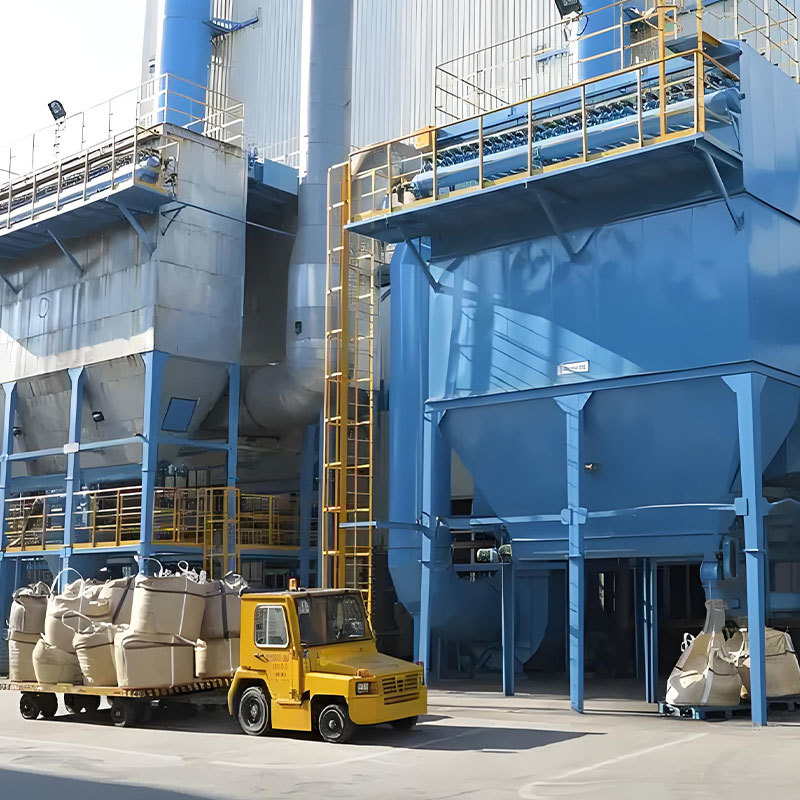
For overseas industrial factories, selecting dust removal equipment is not just about "removing dust", but also about addressing the core pain points of "high temperature corrosion, easy to break machines, flammable and explosive risks, and high energy consumption that is not cost-effective". Especially in the face of strict standards such as EU CE, US EPA, ATEX, only equipment that takes into account "energy conservation, environmental protection, corrosion resistance, and explosion prevention" can meet compliance and reduce long-term operating costs.
1、 Selection premise: First, thoroughly understand the three core working conditions to avoid "blind selection"
Before selecting dust removal equipment, it is important to understand the "basic conditions" of the factory, otherwise even the most advanced equipment may not be effective
1. First look at dust and smoke: determine the direction of "anti-corrosion and explosion-proof"
Dust characteristics: If dust is flammable, priority should be given to explosion-proof design; If the dust contains acid and alkali, anti-corrosion materials are key; Fine dust requires high filtration accuracy, while coarse dust can focus on cost-effectiveness.
Smoke conditions: If the smoke temperature exceeds 200 ℃, temperature resistant equipment is required; Containing corrosive gases such as SO ₂ and Cl ⁻, the shell and filter bag must be corrosion-resistant to avoid rusting and water leakage within 3-6 months.
2. Clarify environmental protection and energy consumption goals: anchor "energy-saving and environmental protection" standards
Environmental compliance: Export to the European Union must meet emissions standards of ≤ 10mg/m ³, North America must meet emissions standards of ≤ 5mg/m ³, and emerging markets such as Southeast Asia have also raised emissions standards to ≤ 20mg/m ³ in recent years. Insufficient filtration accuracy may result in fines ranging from 20000 to 50000 US dollars per violation.
Energy consumption expectation: For factories that operate 24 hours a day, the energy consumption of fans accounts for more than 70% of the total equipment energy consumption. Choosing equipment with frequency conversion function and low resistance can save over 10000 kWh of electricity per year.
2、 Core selection dimension: 3 steps to select "energy-saving and environmental protection+anti-corrosion+explosion-proof" equipment
Step 1: Choose the right "material" for corrosion resistance to extend the lifespan of the equipment
Equipment in industrial corrosion scenarios experiences rapid wear and tear, and selecting the right materials can extend the lifespan of the equipment from 1-2 years to 3-5 years
Shell material: 304 stainless steel is selected for mild corrosion; Choose 316L stainless steel for moderate corrosion; Choose PP plastic or FRP fiberglass for severe corrosion.
Filter bag material: PTFE filter bag is selected for corrosive flue gas, which is acid and alkali resistant; High temperature+mild corrosion PPS filter bag.
Step 2: Carry out "three designs" for explosion prevention to avoid safety risks
Dust removal equipment for flammable and explosive scenarios must pass ATEX or UL explosion-proof certification, and the core design includes:
Pressure relief protection: Explosion relief plates are installed on the ash hopper and box body to automatically release pressure when the pressure exceeds the standard, avoiding explosions;
Anti static treatment: The filter bag is made of anti-static material, and the shell is grounded to prevent dust from rubbing and causing electricity;
Spark interception: Install a spark trap at the entrance to filter out sparks in the flue gas.
Step 3: Energy conservation and environmental protection focus on "2 key points", reducing costs while complying with regulations
Energy saving design: Prioritize equipment with "variable frequency fan+intelligent dust cleaning" - the fan automatically adjusts speed according to dust concentration; Pulse cleaning uses "pressure difference control" to remove dust only when the resistance exceeds the standard, saving 30% compressed air compared to timed cleaning.
Environmental recycling: Choose equipment that supports dust recycling, such as cement powder from building materials factories and flour from food factories, which can be recycled and reused.
3、 Foreign trade adaptation: customized "landing plan" for global working conditions
There are significant regional differences in overseas factories, and equipment needs to be adjusted according to local conditions in order to avoid being incompatible with the local environment
1. Middle East/Africa (high temperature and high dust): The equipment is equipped with a "pre filter layer" to reduce dust wear on the filter bag; The shell is sealed to prevent sand and dust from entering the motor, thereby extending the lifespan of the equipment;
2. Europe/North America (high environmental protection+explosion-proof): The equipment comes with CE/UL/ATEX certification, the filter bag material complies with REACH regulations, supports access to factory ESG data systems, helps customers obtain "green factory" certification, and enhances bidding competitiveness;
3. Southeast Asia (small and medium-sized factories): Provide "simplified" anti-corrosion and explosion-proof equipment to reduce initial investment; Equipped with a multilingual operation manual and a 48 hour after-sales response, it solves the problem of weak local operation and maintenance technology.
4、 Summary: Selection="Compliance+Cost Reduction" Double Guarantee
The core of selecting industrial dust removal equipment is "working condition matching+global adaptation" - first understanding the dust, smoke, and environmental requirements, then screening from three dimensions: anti-corrosion materials, explosion-proof design, and energy-saving configuration, and finally adjusting according to the compliance and working conditions of the target market.
Hot Tags:


Contact Us
Tel:
WeChat:
WhatsApp:
E-mail:
Address:
338 National Road South, Longfengdian Village, Botou City, Hebei Province, China
JiuznTomine is expertly delivering technically complicated projects in markets & provides custom solutions for their customized need.


CONTACT INFO
Tel: +86 18531710311
WeChat: +86-18531710311
338 National Road South, Longfengdian Village, Botou City, Hebei Province, China