












The purpose of dust removal skeleton and dust removal accessories: synergistically ensuring the efficient operation of dust removal system
Aug 19,2025

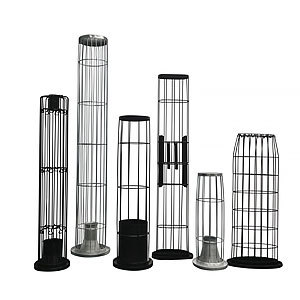
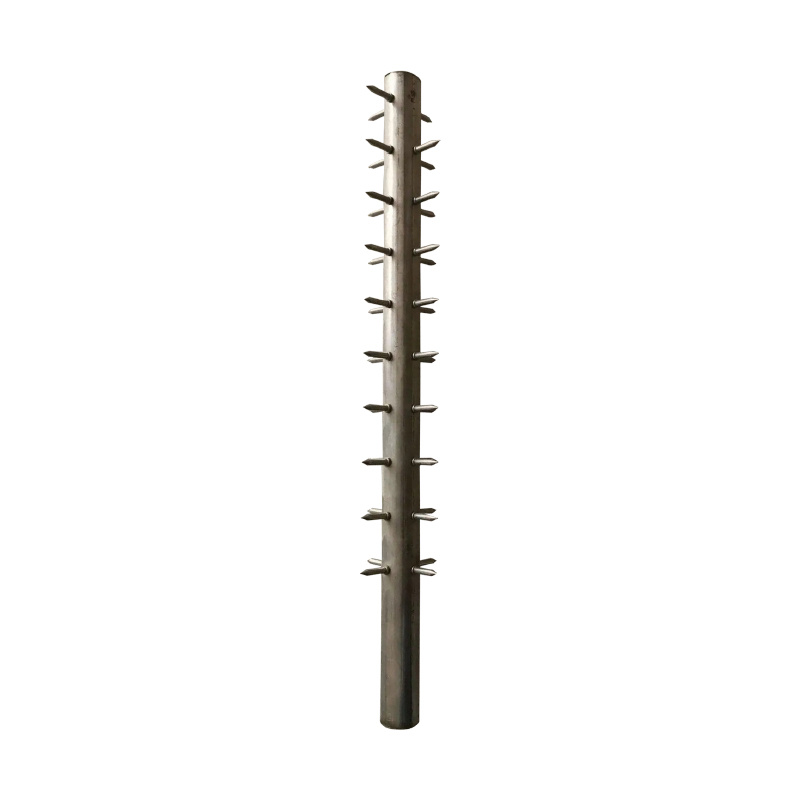
In industrial dust removal systems, the dust removal skeleton, as one of the core dust removal components, does not directly participate in dust filtration. However, through key functions such as support and protection, it collaborates with other dust removal components such as filter bags and cleaning parts to determine the stability and lifespan of the equipment. For enterprises engaged in foreign trade, clarifying the purpose of the dust removal framework and the adaptation logic with other dust removal accessories is an important prerequisite for choosing compliant and durable dust removal systems.
1、 The purpose of the dust removal skeleton is to serve as the "filter bag guardian" in dust removal accessories
The core value of dust removal skeleton revolves around "ensuring the function of filter bags and improving system efficiency", and its specific uses can be divided into three categories:
1. Supporting filter bag: the fundamental role in avoiding filtration failure
As the "internal support" of the filter bag, the dust removal skeleton can prevent the filter bag from collapsing due to negative pressure when filtering dusty gases or deforming due to airflow impact during dust cleaning. Under different working conditions, the support design of the skeleton needs to be accurately adapted:
Normal temperature conditions (such as grain processing): using low-carbon steel galvanized skeleton to ensure that the filter bag remains fluffy and the dust holding capacity is increased by 20%;
High temperature working conditions (such as steel smelting): The 304 stainless steel skeleton can withstand high temperatures above 200 ℃, avoiding deformation of the skeleton that may cause local blockage of the filter bag, and meeting the requirements of EU EN 13000 for the stability of filter bag operation.
2. Ensuring dust removal: a key auxiliary for improving dust removal efficiency
Dust removal is the core component of the dust removal system, and the dust removal framework is designed to enhance the dust removal effect through structural design
The surface of the skeleton is polished (roughness Ra ≤ 1.6 μ m) to reduce the adhesion of dust between the skeleton and the filter bag. When combined with pulse valve spraying, the dust stripping rate is increased by 30%;
The spiral rib design reduces filter bag friction by 50% compared to straight ribs, avoiding filter bag damage during dust cleaning vibration, extending the filter bag replacement cycle (from 1 year to 2-3 years), and reducing overseas customer operation and maintenance costs.
3. Adaptation to working conditions: the "bridge" connecting the dust removal system
The dust removal framework needs to be customized according to different dust removal accessories and working conditions to ensure system compatibility:
When used in conjunction with laminated filter bags, the tolerance of the skeleton diameter should be controlled at+1mm/-0mm to avoid the filter bag being stretched open and causing damage to the coating;
In high humidity and corrosive scenarios (such as chemical and waste incineration), 316L stainless steel or Dacromet coated skeleton is used, in conjunction with corrosion-resistant sealing rings, fluororubber pulse valves and other accessories, to meet the requirements of the US EPA for equipment corrosion resistance.
2、 Collaboration between dust removal skeleton and other dust removal accessories: an efficient "combination password" for the system
The dust removal framework does not exist in isolation and needs to be coordinated with various dust removal accessories to maximize its value. The core collaborative relationship is as follows:
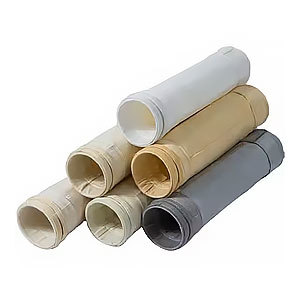
1. With filter bags: the "core partner" of dust removal accessories
The filter bag is the filtering core, and the skeleton is the "supporting carrier" of the filter bag:
The length of the skeleton is 5-10mm shorter than that of the filter bag, leaving room for thermal shrinkage of the filter bag (especially under high temperature conditions) to avoid the filter bag being broken by the skeleton;
Circular, elliptical and other irregular skeletons can be adapted to non-standard filter bags, such as the conical filter bags in the European pharmaceutical industry, ensuring that the filter bags are fully unfolded and the filtration area utilization rate reaches over 95%.
2. Accessories for the dust cleaning system: a "power combination" to improve efficiency
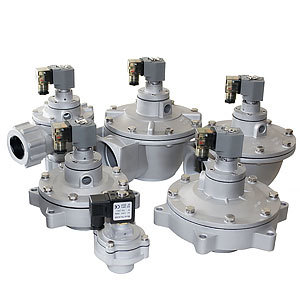
The dust cleaning system (pulse valve, spray pipe, Venturi pipe, etc.) is the "power core" of dust removal accessories, and the skeleton needs to be adapted to it:
The curved transition design at the top of the skeleton can avoid the high-speed airflow from the spray pipe directly impacting the mouth of the filter bag, which matches the 0.1-0.2 second spray time of the pulse valve and reduces local wear of the filter bag;
In the multi tube dust collector, the coaxiality error between the skeleton and the Venturi tube is ≤ 2mm, ensuring uniform airflow distribution and no dead corners in dust cleaning, suitable for high concentration dust conditions in Southeast Asian cement plants.
3. Sealing accessories: a "protective combination" to prevent leakage
Sealing accessories (sealing rings, gaskets, etc.) are the "leak proof barriers" of the dust removal system, and the skeleton needs to cooperate with them to achieve sealing:
The elastic support ring at the bottom of the skeleton is tightly attached to the sealing gasket of the ash hopper, avoiding the leakage of dust containing gas from the gap (leakage rate ≤ 0.5%), which meets the strict dust emission standards of the European Union CE;
In the food and electronics industries, the combination of 304 stainless steel skeleton and silicone sealing ring meets FDA hygiene requirements and prevents secondary pollution.
Although the dust removal skeleton is a "niche" dust removal accessory, it is an "invisible pillar" that ensures the efficient operation of the dust removal system. The precise utilization of its purpose cannot be achieved without the collaborative adaptation with other dust removal accessories; The combination of skeleton and accessories that meet international standards is the key for foreign trade enterprises to break through environmental barriers and win the trust of overseas customers. Choosing a suitable dust removal framework and matching accessories can not only improve equipment stability, but also reduce cross-border operation and maintenance costs, providing reliable support for global industrial dust control.
Hot Tags:


Contact Us
Tel:
WeChat:
WhatsApp:
E-mail:
Address:
338 National Road South, Longfengdian Village, Botou City, Hebei Province, China
JiuznTomine is expertly delivering technically complicated projects in markets & provides custom solutions for their customized need.


CONTACT INFO
Tel: +86 18531710311
WeChat: +86-18531710311
338 National Road South, Longfengdian Village, Botou City, Hebei Province, China